

2nd December 2025 6 MIN READ •Resources
Key takeaways
- Performance management is the ongoing process of monitoring employees’ performance in the workplace, ensuring it aligns with wider business goals
- Employee performance management is important to identify areas for training and development, encourage productivity, recognise good performance, and keep all staff working towards a common goal
- Effective performance management begins with goal setting, and requires continuous performance monitoring, open communication, offering professional development opportunities, and recognition and rewards
- The benefits of performance management for businesses can include greater accountability, enhanced productivity, improved staff retention, and the ability to make data-driven decisions regarding promotions and pay rises
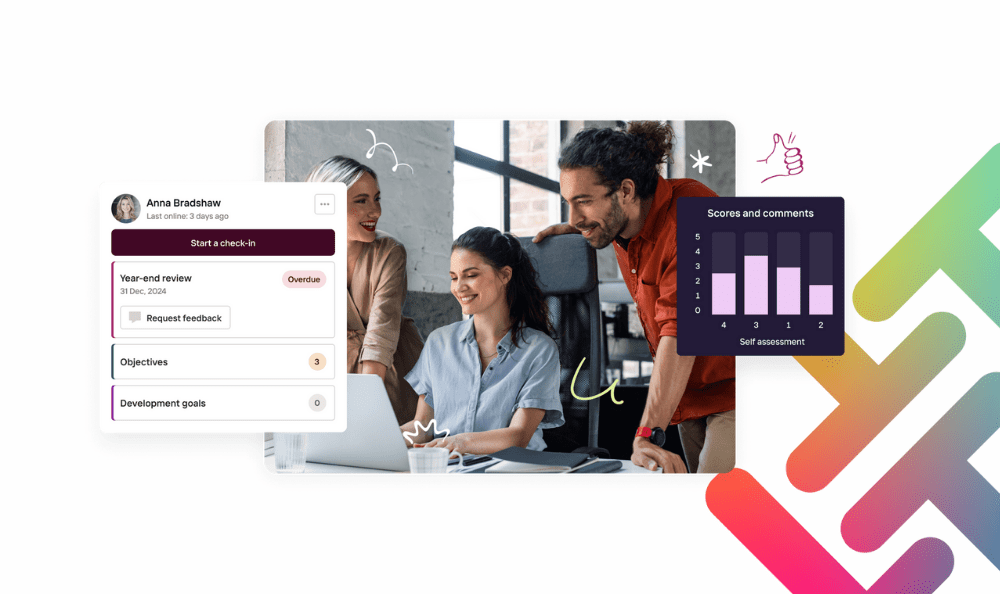
Performance management is a continuous process for monitoring how well employees are performing in line with an organisation’s overall goals and objectives. In this guide, we explore why performance management is so important, the benefits it can deliver for both employers and employees, as well as how to introduce an effective performance management process.
Table of Contents
What is performance management?
Performance management is the ongoing process of monitoring how well employees are performing in the workplace. Performance management involves setting measurable goals, monitoring effort, output and the quality of work, delivering feedback, and providing opportunities for continued development.
Why is performance management important?
Performance management is important for multiple reasons. It makes sure that employees’ work continues to align with wider business goals, and creates a performance-driven culture, where staff know hard work is rewarded. Performance management can encourage staff to continue developing in their roles, while helping employers to identify potential areas for improvement, so everyone can reach their full potential.
An organisation’s performance management strategy provides a standardised framework for monitoring, measuring and evaluating performance across all teams, which can feed into wider skills development or employee engagement initiatives. As a result, this can help to increase job satisfaction and improve staff retention.
What are the benefits of performance management for businesses?
Monitoring and nurturing employee performance can be hugely beneficial for employers, with advantages including:
- Goal alignment: developing a performance management process helps to ensure all employees are aligned with wider organisational objectives, so everyone is working towards a common goal. This creates team cohesion and supports overall employee motivation
- Encourage accountability: monitoring employee performance creates a culture of accountability. Setting out clear expectations for individual members of staff encourages a sense of ownership and responsibility for task completion and success
- Improve productivity: setting clear goals helps to motivate employees, which can enhance productivity. Software and reporting tools can also provide access to performance data, so areas for improvement can be easily identified
- Identify training needs: employers can spot areas for training and development when employee performance is reviewed regularly. Action can then be taken to upskill staff, so they can contribute more effectively to business goals
- Higher staff retention: performance management can be an effective tool for supporting staff retention, as employees who feel motivated, engaged and valued are more likely to stay with your business long term. Supporting staff to reach their career goals and providing a framework for them to do so can help to reduce turnover and benefit overall team morale
- Make better-informed talent decisions: reviewing employee performance also provides employers with up-to-date insights into top-performing staff. This allows businesses to make fair, data-driven decisions regarding promotions and pay rises
What are the benefits of performance management for employees?
Implementing a performance management process also offers multiple benefits for employees, including:
- Setting clear expectations: establishing goals as part of the performance management process sets out exactly what each employee is expected to achieve, encouraging them to take accountability for their performance
- Regular feedback: when employees receive regular feedback and constructive guidance, they’re able to address any areas that require further development. Positive feedback can also impact employee motivation and engagement, benefiting team morale
- Increased motivation: knowing that hard work will be recognised and rewarded can be incredibly motivating to employees, as it makes them feel more valued by their employer
- Professional development opportunities: performance management doesn’t just centre on business goals, but also employees’ own career goals. Ongoing performance monitoring helps people continue to grow and develop in their careers, and identifies opportunities for training and skills development
- Greater job satisfaction: when employees feel recognised, valued and nurtured, they are more likely to feel happy at work, which has a knock-on impact on motivation, engagement, and retention
Key elements of effective employee performance management
The basic elements of an effective employee performance management strategy include:
- Goal setting: clearly defined goals must be at the centre of every performance management process. Employees need to be aware of overall business goals and how their own individual SMART goals will contribute to these
- Performance monitoring: ongoing monitoring of each employee’s performance is integral to an effective performance management strategy. This can take many forms, such as self-assessments, gathering feedback from peers, tracking productivity, and performance reviews or appraisals
- Clear communication: regular, clear communication is essential for a successful performance management strategy. HR and management need to communicate performance feedback to employees regularly, as well as listening to staff’s concerns and suggestions. This helps to create a more collaborative, open culture
- Recognition and rewards: taking the time to recognise good performance is another key aspect of an effective performance management strategy. Consider offering rewards when goals are achieved or succeeded. These could include company-wide praise, bonuses, or promotions
- Ongoing professional development: the performance management process should also provide opportunities for career development through ongoing training and mentorship. Monitoring performance closely means managers can identify areas requiring extra development, so everyone gets the support they need to achieve their full potential
How to implement a performance management process
Although every organisation is different, there are key steps that should always be followed when introducing a performance management framework. An employee performance management process should include the following steps:
1. Clearly define goals
The first step in any performance management process is to set clearly defined goals to ensure employee objectives align with wider focuses. Goals should be SMART (specific, measurable, achievable, relevant, and time-bound), with each one linked to an overall business goal. Employees should also be aware of how their performance will be monitored, and how often reviews or appraisals will take place.
2. Continuous monitoring
Ongoing monitoring is required to track performance on every task. There’s a risk that this could feel like micro-managing, but using software and other tracking tools allows this to be done from a distance, while collecting accurate data on employee performance.
3. Open communication and feedback
Continuous communication and frequent feedback are integral to effective performance management. Feedback can take different forms, including:
- 121 meetings
- Performance reviews
- Appraisals
- Self-assessment
- Peer feedback
Creating a culture where praise is given for good work and constructive feedback is provided for areas that require improvement means employees can better understand if they are on track to achieve their goals. Don’t wait for formal performance reviews to deliver feedback, as this helps to prevent opportunities from being delayed or missed, avoiding bigger challenges further down the line.
4. Provide development opportunities
Training and other opportunities for upskilling and development are another key part of a performance management strategy. Regularly reviewing performance means areas requiring training and development can be identified, so employees can be given the support they need to fulfil their potential.
5. Recognise good performance
Take the time to recognise, acknowledge and reward good performance within your team. This could take the form of public praise, a pay rise, bonus, promotion, or extra time off, depending on your company policies. Recognising hard work and good results helps employees to feel valued, can increase staff engagement, and contribute to reducing churn.
6. Address underperformance
If your performance management framework identifies that an employee is underperforming, action will need to be taken to address these issues and try to nip them into the bud. Setting clear goals and KPIs means all parties are aware of what success should look like, so these conversations shouldn’t come as a surprise to the employee concerned.
7. Review and improve performance management processes
HR and management should regularly review the performance management process itself to identify any areas that require adapting or improving to ensure the strategy works for everyone. Gather feedback from employees and managers, and listen to any concerns to inform any necessary tweaks or improvements.
How to manage employee underperformance
If performance monitoring identifies that an employee is underperforming, this can require a difficult conversation. Here are some tips for approaching this, and for trying to turn the situation around:
1. Set up a meeting
The first step to addressing employee underperformance is to set up a meeting between the employee, HR, and their line manager. Host the meeting in a private, comfortable space, and make sure the employee is aware of the purpose of the discussion in advance, so they aren’t taken by surprise.
HR or management should lead the meeting, clearly outlining the points of concern, before allowing the employee to provide their point of view. It may be that an issue outside of work has been affecting their performance, so take the time to listen to them, so the response can be fair and considered.
2. Outline expectations
HR will then need to outline expectations for how the employee needs to improve their performance. This will likely include closer performance monitoring, and updated goals to support the employee to improve. Make sure the employee agrees to these goals, and is aware of how they will be monitored before moving to the next stage.
3. Implement a performance improvement plan (PIP)
In some cases, it will be necessary to introduce a performance improvement plan (PIP), which will formally outline expectations using the SMART framework. Detailed documents will need to be kept as part of this process, recording all meetings and progress. This is important if further escalation is required.
4. Provide reasonable support
As part of a PIP, employers should make sure the employee has the necessary resources, training and support to turn their performance around. For example, they may benefit from targeted coaching or mentorship for extra support during this time.
5. Hold follow-up meetings
Follow-up meetings to review and discuss progress should take place during the PIP period, and positive progress should be acknowledged and recognised. This will help to keep the employee motivated during this challenging period.
6. Escalation
If the employee continues to underperform, escalation may be required. Each business will have its own policy and procedure for determining what needs to happen next, so speak to your HR team about the next stages.
Performance management FAQs
There is no one set person or department responsible for managing employee performance. The responsibility for different parts of the process may fall to:
HR teams: HR is typically the department tasked with establishing a performance management process, and ensuring managers stick to it. HR will usually train the rest of the company on the strategy so everyone understands their own individual responsibility.
Employees: every employee needs to take responsibility by contributing to setting their own goals, working towards these, and committing to continued professional development to benefit the wider business.
Leaders and managers: those in management or leadership positions play a key role in effective performance management by tracking employee performance and conducting reviews. They are also responsible for creating and leading an open culture, where everyone understands what’s required of them and is supported to reach their goals.
The performance management cycle comprises four key stages:
Planning: this encompasses goal setting and planning which resources are needed to deliver work in line with goals
Monitoring: this includes tracking productivity, regular check-ins, and gathering feedback
Reviewing: performance is evaluated in line with the goals established during the planning phase, often via a performance appraisal
Rewarding: good performance is recognised and rewarded, before the cycle begins again, fuelling continuous development and improvement
Performance management is different to management by objectives (sometimes referred to as MBO). The key differences between the two are:
Management by objectives involves setting SMART goals in line with business objectives to create a clear framework for performance evaluation and performance management is an ongoing process to monitor an employee’s performance, and management by objectives may form part of this
Performance management and performance appraisals are often discussed alongside each other, but there are some key differences between the two concepts: Performance management is an ongoing, two-way process that requires collaboration between employees and managers. It centres around tracking employee goals in line with wider organisational objectives Performance appraisals are periodic reviews of an employee’s performance that may take place quarterly or annually. They focus on how an employee has performed in the previous period, and they form part of a wider performance management strategy
If your organisation works remotely or on a hybrid basis, your performance management strategy will need to be focused around tools and software that enable remote performance monitoring and digital reporting. Virtual check-ins should replace face-to-face meetings, and digital communication tools will need to be embraced. Otherwise, the principles of performance management remain the same.
Transform employee reviews with performance management software
Performance management software can transform the way your organisation tracks employee performance. Appraisd by Talos360 provides the ability to tailor employee reviews, set performance goals, gather feedback, and recognise performance from one easy-to-use dashboard, benefiting management and employees alike. The platform enables automated reporting and integrates seamlessly with your existing systems, so you can start experiencing the benefits straight away. Contact us today to find out more.