
6th April 2022 3 MIN READ •Talos Engage •Employee Value Proposition
Workplace benefits are the building blocks of our EVP (employee value proposition). They’re the incentives that keep employees engaged with their roles, and reward them for their continued strong performance. Today we discuss the difference between tangible vs intangible employee benefits, including their role and effect within your HR strategy.

What are ‘tangible’ employee benefits?
Tangible employee benefits are received by employees directly. This may include bonus schemes, healthcare plans, or a company car allowance.
These are often written into employment contracts, and tend to vary between position, department, or seniority. Tangible benefits are often advertised in recruitment adverting campaigns but are discussed in the later stages of the recruitment process.
Any changes to your tangible benefits package will have a direct impact on your employees. They can be used to recognise good performance, acknowledge length of service, or promote retention within your workforce.
What are ‘intangible’ employee benefits?
Intangible benefits are more abstract, and tend to affect your workforce on a wider basis. This may include things like your office environment, flexible working initiatives, work-life balance, and staff social events.
Unlike tangible benefits, these incentives are rarely contractual, and may even be given on a one-off basis. For example, you may hold a company-wide celebration after a period of strong performance. Any intangible benefits should be presented during the onboarding process – so make sure top add it to your onboarding checklist.
Intangible benefits are the building blocks of your workplace culture – the day-to-day environment in which employees carry out their work. These are a powerful asset to your employer brand, helping you to communicate your cultural values within the job market.
Tangible vs Intangible benefits: which are better?
Most employers show little distinction between tangible and intangible benefits – instead, combining both into their employee incentives package. However, there is a huge difference between the two, and how they affect employee satisfaction and retention.
Here’s why the strategic contrast between ‘tangible vs intangible’ is so important:
– Why tangible benefits matter
Tangible benefits work a lot like salary; they’re a form of compensation for employees’ time and dedication to your business. They’re your second most important ‘bargaining chip’ in retaining and inspiring your colleagues.
Tangible benefits tend to change for individual employees, and can be used to recognise a promotion or length of service. For example, employees at management level may become eligible for a company car allowance. This, along with an increase in salary, serves as an additional level of compensation for their heightened responsibilities.
– Why intangible benefits matter
Intangible benefits are what define your employer brand and workplace culture. These can be used as a unique selling point (USP) for your business when seeking to attract new talent.
While they may not be seen as a direct form of compensation, intangible benefits are just as important for maintaining employee morale and wellbeing. They serve as a valuable form of workforce recognition, without being limited to individual employees/departments.
Your intangible benefits are what set you apart from other employers in the job market. They’re vital for attracting the most sought-after candidates to join your business. Without a strong foundation of cultural incentives, you’ll find it difficult to compete for talent in your industry.
Introducing…
Talos Engage: Build a benefits package that resonates
Unsure which benefits to offer your employees? You’re not alone – that’s why we created Talos Engage.
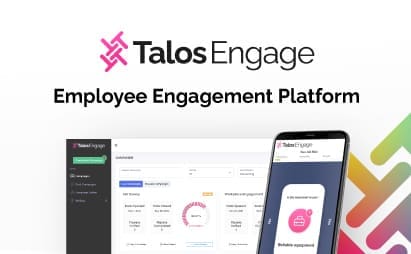
Talos Engage is our gamified approach to employee sentiment analysis, allowing you to gain valuable instant feedback from different areas within your workforce.

Tangible vs Intangible: What matters to your workforce?
By using Talos Engage, you’ll identify which benefits matter most/least to your employees. This will help you to balance priority between tangible vs intangible incentives, building a benefits package that truly resonates and drives engagement.
Gamified employee engagement
No more tedious workplace surveys! Employees simply play the Engage swipe-card game to give crucial feedback on your company culture, HR strategy, and benefits package.
Their responses are then instantly formulated into a user-friendly report, giving your HR team total visibility over employees’ wants and needs.
Track changing workforce expectations
Employees’ expectations change with time. Keeping up with these trends is vital for retaining a strong, motivated workforce.
Talos Engage makes workforce analysis easy. Simply add your questions into the app, and get employees playing instantly.
You’ll never miss out on the latest trends in expectations within your workforce, allowing you to combat employee turnover and demotivation more proactively.
Discover an easier way to approach employee benefits – balance tangible vs intangible for maximum career satisfaction: