
20th August 2024 7 MIN READ •Talos ATS
Every workplace has its own set of workplace challenges, but there are some similar challenges that each and every business will face. Here, we look at the top challenges at work outlined by hiring managers in our latest research, The Future of Talent.

Table of Contents
Our industry study into The Future of Talent saw Talos360 survey over 1,000 current employees and more than 250 hiring managers to uncover the current HR challenges in the workplace from both an employer and employee perspective.
Our results have outlined the top workplace challenges our hiring manager respondents experience, from employee retention and productivity concerns to employee burnout and salary increases.
What are challenges in the workplace?
Challenges in the workplace are any issues faced by employers or employers that restrict either party’s ability to achieve success. Workplace challenges can act as a roadblock, reducing productivity, damaging communication, and even affecting the business’ bottom line.
Problems in the workplace can arise from anywhere in the business, whether it’s hierarchical disputes or payment or employee benefits issues. Ultimately, any challenges in the workplace are an employer’s responsibility to resolve.
If left unresolved, workplace challenges can lead to conflict, disrupt business operations, and even result in a trip to court if they go too far. Thankfully, there are less drastic ways to prevent challenges at work from occurring, including clearer communication between employers and employees, defined objectives, and improvements to current business processes.
7 challenges at work and how to overcome them
As part of our Future of Talent research, we asked hiring managers about their specific workplace challenges. Unsurprisingly, 96% of respondents told us that their business is currently facing some challenges.

Here are the top examples of challenges at work, as identified by employers:
1. Employee Retention
It’ll come as no surprise that employers’ biggest challenge at work is employee retention in the workplace. Somewhat of a HR enigma, many businesses just can’t seem to crack the code to talent retention. Out of our surveyed participants, 41% noted employee retention as their main workplace challenge.
An issue with retention doesn’t just mean decreased engagement amongst your workforce; if left untreated, it can result in lower morale, reduced productivity, and frequent expensive recruitment campaigns.
Solution: adopt employee engagement software
When it comes to retention, there is no easy fix, but there are ways employers can improve one of their top challenges at work. The best way to improve employee retention is by implementing employee engagement software – a system that provides all the data you need to generate employee engagement ideas, improve employee wellbeing, and mitigate any premature exits.
Adopting an employee engagement system and utilising employee engagement surveys can help determine which workplace challenges your people are currently facing and provide you with data to help you find a solution before your employees find a job elsewhere.
2. Salary Increase Requests
Any employer will understand the importance of salary increases for employees. With the ever-rising cost of living, salary increases are a main motivating factor for a majority of the workforce. While it’s important to keep your people happy, well-motivated, and well-compensated, salary increase requests remain troublesome for many employers.
Our latest survey found that salary increase requests are the second most common workplace challenge faced by hiring managers, with 39% of respondents citing this as being at the top of their list of workplace challenges.
While requesting a salary increase isn’t a problem in itself, when employers can’t provide the salary increase employees request, new problems in the workplace arise.
Solution: explore other non-monetary alternatives
For employers facing this particular challenge at work, there are a number of ways you can manage salary increase requests:
- Take the situation seriously, and give people your full attention
- Listen to each employee’s concerns and reasons behind their request
- Conduct a review of the industry standard salary for their position
- Review your employee’s performance leading to their salary increase request
- Suggest and discuss non-monetary alternatives to salary increases, e.g extra holiday days or improved benefits
3. Employee Burnout
One of the most common challenges at work for employees and employers alike is employee burnout. Burnout topped the list of workplace challenges for 34% of our hiring manager respondents.
A particular type of work-related stress, employee burnout is the consequence of a poor work-life balance, excessive workplace pressure, mental health difficulties or potential financial instability.
Employees experiencing burnout are likely to drop their work performance and focus, resulting in a loss of productivity and higher levels of absenteeism. For employers, employee burnout can result in several problems in the workplace, from reduced productivity to higher employee turnover, as the business struggles to perform as it should.
Solution: improve employee relations
HR teams are always looking for ways to show employees they care and reduce employee burnout. Better understanding employees’ challenges, taking tangible action to address these and reducing employee workload are just some examples of how employers can improve relations with their people to reduce burnout.
Here are some of the best ways to reduce employee burnout in any organisation:
- Improve employee/employer relations
- Maintain meaningful communication with employees
- Address appropriate workplace boundaries
- Reduce workload to ease the pressure
- Provide flexible working opportunities
4. Employee Wellbeing
30% of our hiring manager respondents told us employee wellbeing is their biggest workplace challenge. When employees start to experience difficult times, it can be difficult for employers to manage the personal needs of their people and the needs of the business.
This can create new challenges in the workplace that can lead to low morale, high absenteeism and employee burnout.
For employers, it’s important to prioritise employee wellbeing, not just for the sake of your people, but also to keep your employer brand in check.
Solution: put a comprehensive HR strategy in place
There are plenty of ways employers can support employee wellbeing challenges from offering flexible working to assessing their wants, needs and objectives, but these all begin with putting a comprehensive HR strategy in place.
When employees are struggling with their wellbeing, the first step to providing the proper support is to put a plan in place. Consider your employees’ needs, provide access to wellbeing resources and ensure your people know where to access these materials when required.
Employers can also offer flexible working when needed. For those experiencing challenges outside of work, this is a great way to ease the pressure and support a healthy work-life balance. By providing flexible working from day one, employers could potentially avoid even more workplace challenges from high stress levels to employee burnout.
Employers can prioritise long-term objectives over short-term KPIs for employees facing external issues rather than problems in the workplace. This can help alleviate any pressure for those struggling outside of work.
5. Skills Shortage
It appears that the well-documented skills gap continues to affect UK employers. 29% of hiring managers state skills shortages as their most significant challenge in the workplace.
A skills shortage within your industry can result in a pool of candidates who are underqualified or inexperienced for the role you are hiring for.
For employers, this means extended recruitment campaigns, increased training costs, and a dip in productivity as new recruits gain competency in their roles.
Solution: utilise specialist recruitment tools
Implementing the correct technology can help to combat the ongoing skills shortage. Adopting advanced hiring software can filter candidates and help hirers to find the right people to fill vacancies.
The best applicant tracking systems integrate with additional ATS features, such as candidate assessments, which narrow the candidate search and help you find an applicant that meets your set requirements.
6. Low Productivity
Low productivity is one of those challenges at work that every employer knows all too well. Our latest research into the Future of Talent revealed that 17% of hiring managers find low employee productivity to be their biggest workplace challenge.
Low productivity can arise for many reasons, some of which we’ve mentioned above. From employee burnout and poor employee wellbeing to disconnects between employers and employees, there are many reasons why employees might struggle to reach their targets.
For employers, low productivity across their workforce means reduced output, a suffering bottom line, and potentially some difficult conversations with underperforming staff.
Solution: support overworked employees
Like most challenges at work, low productivity is often a result of overworking employees. Solving productivity problems in the workplace is more simple than you’d think.
To increase worker productivity, start by identifying your people’s current problems and finding ways to support them. If employees are struggling with their workload, delegate tasks to minimise pressure. In return, employees can better focus on the work they do best, without slowing down other areas of the business.
7. Managing Diversity
Our Future of Talent research revealed that over 20% of hiring managers are struggling to manage diversity in the workplace, naming it as their biggest workplace challenges. While it seems diversity and inclusion has slightly shifted out of the spotlight in recent times, developing a comprehensive D&I strategy is still a key area of focus for HR.
Building a diverse workforce doesn’t just help to bring new skill sets into the business; it significantly boosts workplace satisfaction and morale. It also does wonders for your performance on the job boards, as 74% of employees find it important to work for a business that values diversity, equity and inclusion in the workplace.
Solution: rework your recruitment strategy
If managing diversity and inclusion is one of your main challenges at work, then the best place to start rectifying the problem is your recruitment process. By working on the individual steps of the recruitment process, you can identify any potential barriers and create a more inclusive process. Below are some ways you can build a more inclusive recruitment process:
- Identify and remove any obstacles for applicants
- Open your talent pool to wider areas
- Conduct video interviews remotely
- Incorporate scorecards and candidate assessments into your hiring process
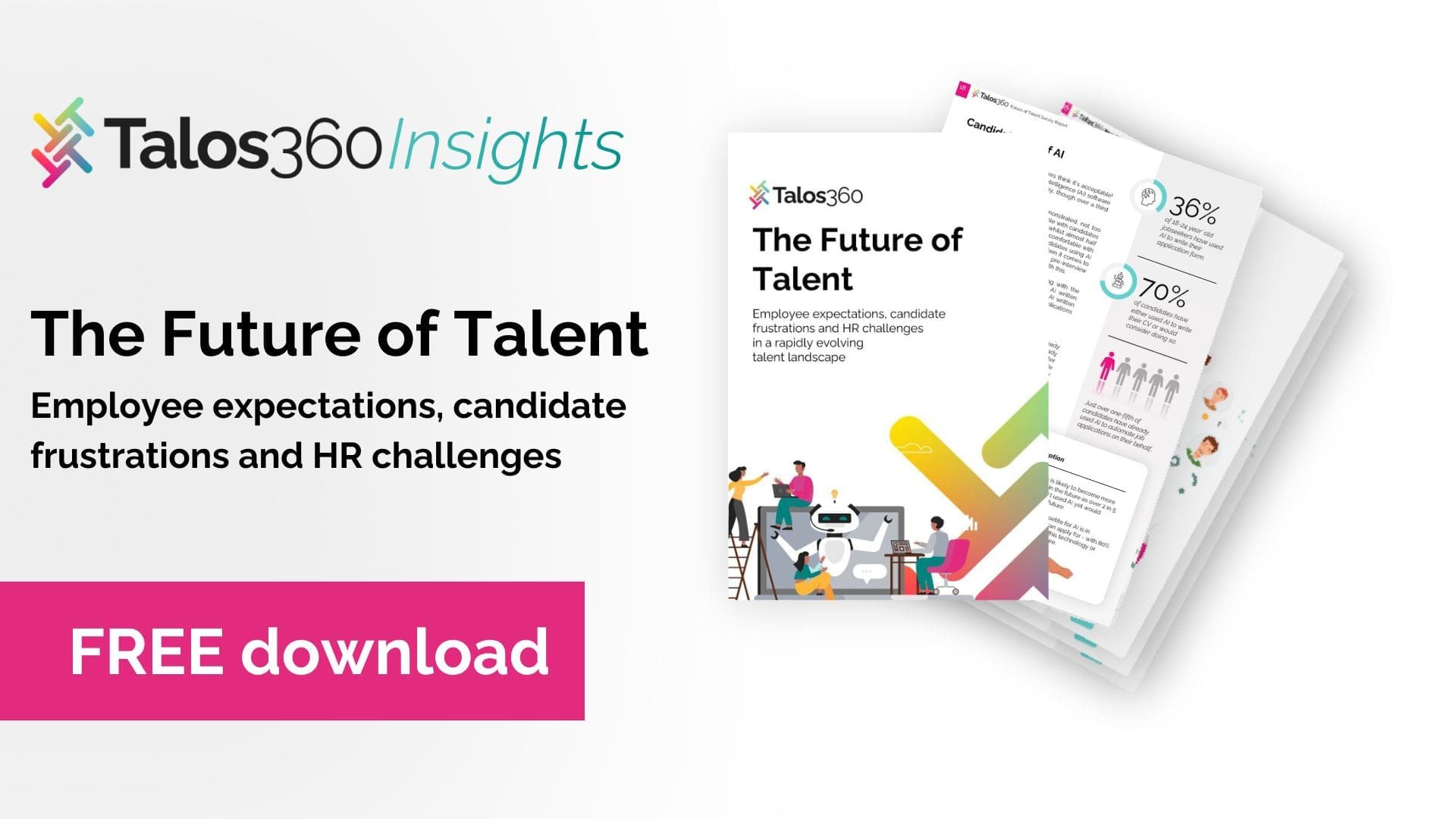
The Future of Talent – Challenges at Work
Our stats on hiring managers’ top challenges in the workplace were taken from our recent Future of Talent Report.
Our latest research saw Talos360 survey over 1,000 current UK employees and 250 hiring managers across multiple industries to provide a balanced employer and employee lens on current HR challenges, including hiring managers challenges at work, and how they might overcome them.
Highlighting the biggest problems in the workplace faced by employers, as well as the workplace challenges employees face, our research on the Future of Talent is helping HR find a better way to manage their people.
See all the latest challenges at work HR professionals are facing in our FREE Future of Talent Report. Download your copy today.