
20th May 2026 6 MIN READ •Resources •Talos Perform
Measuring employee performance is an integral part of any performance management strategy. Over the past few years, economic output per hour has stalled in the UK, coming in 0.4% lower in 2025 than in 2023. Measuring productivity is more crucial than ever to understand your workforce’s performance, and get ahead of any declines in output.
There are many different KPIs to track, so we’ve put together guidance on the best metrics and methods to measure employee performance.
Key takeaways
- Measuring employee performance is important to ensure company-wide goal alignment, identify skills gaps and training needs, increase employee engagement, and facilitate better-informed decision making
- Common key performance indicators (KPIs) to measure employee performance include productivity, quality of work, effective collaboration, adherence to deadlines, leadership qualities, and client satisfaction rates
- There are many different ways to measure employee performance, with performance management software, Talos Perform being one of the most effective tools. Adopting a continuous approach to performance management is also recommended, as this facilitates regular check-ins, real-time feedback, and greater transparency to encourage continued progress
- Best practice tips for measuring employee performance include setting and tracking SMART goals, gathering 360-degree feedback, fostering a culture of open communication, recognising and rewarding top-performers, and addressing underperformance promptly

Table of Contents
8 effective KPIs to measure employee performance
Common KPIs and objectives used by HR and management to measure employee performance include:
- Productivity and efficiency
- Consistent quality of work
- Demonstration of initiative
- Effective collaboration
- Adherence to deadlines
- Engagement with learning and development opportunities
- Leadership qualities
- Customer satisfaction rates
How to measure key employee performance management metrics
Knowing how to measure employee performance effectively is critical to ensuring a successful performance management strategy. Discover our tips for measuring success against key continuous performance management objectives.
1. Productivity and efficiency
An employee’s productivity is a good indicator of their motivation, morale, and commitment to their role. If productivity slides, this can signal a decline in morale or that there are other factors affecting performance.
How to measure employees’ productivity and efficiency
- Track goal achievement within a specific timeframe – setting SMART goals makes these easier
- Measure overall task completion rate
- Calculate the amount of assigned work that is completed at the end of a set timeframe
2. Consistent quality of work
Another effective way to measure employee performance is by monitoring the quality of individuals’ work. High-quality work is typically a sign of a happy, motivated employee, who is actively contributing towards wider organisational goals.
How to measure quality of work
- Monitor the number of errors an employee is making, and rounds of amends required
- Look at the time taken to complete individual tasks – if this is significantly above expectations, it may indicate that work requires additional time spent on corrections
- Check that work adheres to expected guidelines and processes
- Look at how much peer recognition and praise employees have received – this can be recorded via Talos Perform, and it’s a good way to identify individuals who are consistently excelling
- Assess client or customer satisfaction through surveys, reviews or 360-degree feedback gathering
3. Demonstration of initiative
Initiative can be a more challenging metric to monitor, but it’s something that top-performing employees will demonstrate. Showing initiative indicates a proactive approach and commitment to innovation. These are key drivers of efficiency, benefiting the wider company.
How to measure initiative
- Gather 360-degree feedback to find out how often employees are being proactive, and going above and beyond their job description
- Take note of suggestions offered by employees to improve processes or influence positive change in other ways
- Assess how long it takes to implement these suggestions, and track the cost savings or efficiency gains they generate to show their business impact
4. Effective collaboration
An individual’s attitude towards collaboration is another effective way to measure employee performance. Employees who are actively collaborating with colleagues and across departments are valuable team players, so it’s important to recognise their contribution and commitment.
How to measure collaboration
- Monitor employees’ participation in group discussions or willingness to volunteer for cross-departmental opportunities
- Record how often peers mention that employees share knowledge, provide support, or communicate effectively when gathering 360-degree feedback
- Keep an eye on individuals’ usage of shared tools to contribute to collaborative projects
- Track how much recognition (both public and private) team members receive through Talos Perform
5. Adherence to deadlines
If a team member regularly fails to meet deadlines, this can signal low engagement, which can have a knock-on impact on the wider team. In contrast, employees who consistently adhere to deadlines are more likely to be engaged – however, it’s still important to check in with them regularly to ensure they aren’t feeling pressure or risking burnout.
How to measure adherence to deadlines
- Ensure deadlines are clearly defined prior to projects commencing to avoid any confusion; for example, explicitly state when exactly ‘EOD’ means
- Track the percentage of tasks completed on or before the agreed deadline
- Use a project management tool that timestamps when tasks were last viewed or updated to assess engagement with processes
6. Engagement with learning and development opportunities
Ongoing learning and development is a critical aspect of continuous performance management, making it an important metric to measure. Shaun Kirk, Chief Technology Officer at Talos360, explains: “This requires input from both sides; management is responsible for providing development opportunities that staff can participate in, while employee engagement is essential to ensure training success.”
How to measure engagement with learning and development opportunities
- Track individuals’ participation and completion rate for training sessions
- Assess knowledge post-training to check what employees have learned
- Monitor the application of new knowledge and skills in day-to-day work, and the business benefits this contributes towards
- Survey staff to garner feedback on how future training and development opportunities could be improved
- Monitor adherence to personal development plans (PDPs) – these can be managed and tracked via Talos Perform
7. Leadership qualities
Not every employee will be at leadership level or working towards it, but for those that are, it’s important to monitor their leadership qualities as part of the continuous performance management process.
How to measure leadership qualities
- Review individuals’ readiness for promotion at each performance review or appraisal
- Look at staff retention and engagement rates within leaders’ teams, as this can provide insights into their management style
- At the same time, consider goal and project completion in their team to assess how productive the team they are leading is
- Identify top-performers and their individual skills and strengths. Talos Perform tools such as the 9-box grid can assist in identifying these individuals, while also providing a bird’s eye view of the entire team or department
8. Customer satisfaction rates
Monitoring customer or client satisfaction levels is also an effective way to measure employee performance, as it provides a tangible insight into the standard of work that individuals deliver. In customer-facing roles, employees are the face of an organisation, and their performance can directly impact the company’s overall reputation.
How to measure customer satisfaction rates
- Use CRM tools to track metrics such as average query resolution time
- Conduct customer surveys to gather direct feedback on employees’ interactions. This can be used to calculate an overall customer satisfaction score (CSAT)
- Source feedback from clients to use as part of the 360-degree feedback process
Why is it important to measure employee performance?
Measuring employee performance is important for many reasons, including:
- Goal alignment: aligning employees’ goals with wider organisational objectives helps to make sure everyone is working towards a shared purpose. Tracking progress towards goals via employee performance management software helps to ensure continued alignment
- Employee development: monitoring staff performance allows managers to easily identify training and development needs. Providing these opportunities supports people’s professional development, making staff feel valued, potentially benefiting employee retention too
- Increased employee engagement: implementing a continuous performance management process helps to keep employees engaged, positively impacting motivation, productivity, and morale as a result.
- Improved decision making: measuring employee performance using software provides HR and managers with accurate data to inform decisions regarding promotions, salary increases, and more
- Enhanced company culture: ultimately, tracking people’s performance helps to create a culture of transparency and accountability, where everyone feels supported to achieve their goals, and contribute to the company’s success
Read more: Why is performance management important? 9 key benefits
Best practices for measuring employee performance
Make sure your performance management approach is as effective as possible by following these best practices for measuring employee performance:
- Use performance management software: the best way to measure employee performance is to track goals, achievements, feedback, 121s, and more in one central place using performance management software
- Prioritise continuous performance management: adopt a continuous approach to performance management that encompasses regular check-ins, ongoing development, and real-time feedback, rather than relying on annual performance appraisals
- Set SMART goals: all goals established to measure employee performance need to be set in line with the SMART framework, meaning they need to be Specific, Measurable, Achievable, Relevant, and Time-bound.
- Gather 360-degree feedback: rather than focusing on top-down feedback from managers to employees, 360-degree feedback sources insights from a range of viewpoints. This may include an individuals’ peers, direct reports, and clients they interact with to provide a more rounded, realistic view of performance
- Encourage self-assessment: ask employees to reflect on their own progress on a regular basis to stay accountable – effective performance management is a two-way approach
- Provide development opportunities: performance reviews will identify skill gaps and training needs, so ensure employees are provided with opportunities to develop in these areas. This will benefit their professional development and the wider business
- Open communication: fostering a culture of open communication is an essential aspect of performance management to facilitate feedback gathering on all sides. This ensures everyone is aware of areas for improvement and means processes can be enhanced
- Reward top-performers: recognising high-performers is one of the most rewarding elements of measuring employee performance, helping people to feel valued and boosting morale
- Address underperformance: if the performance management metrics you’re monitoring identify that an individual is underperforming, it’s important to address this promptly to prevent the problem escalating
Read more: 25 proven performance management best practices
How to measure employee performance with Talos360
Transform the way your organisation monitors performance management objectives with Talos Perform.
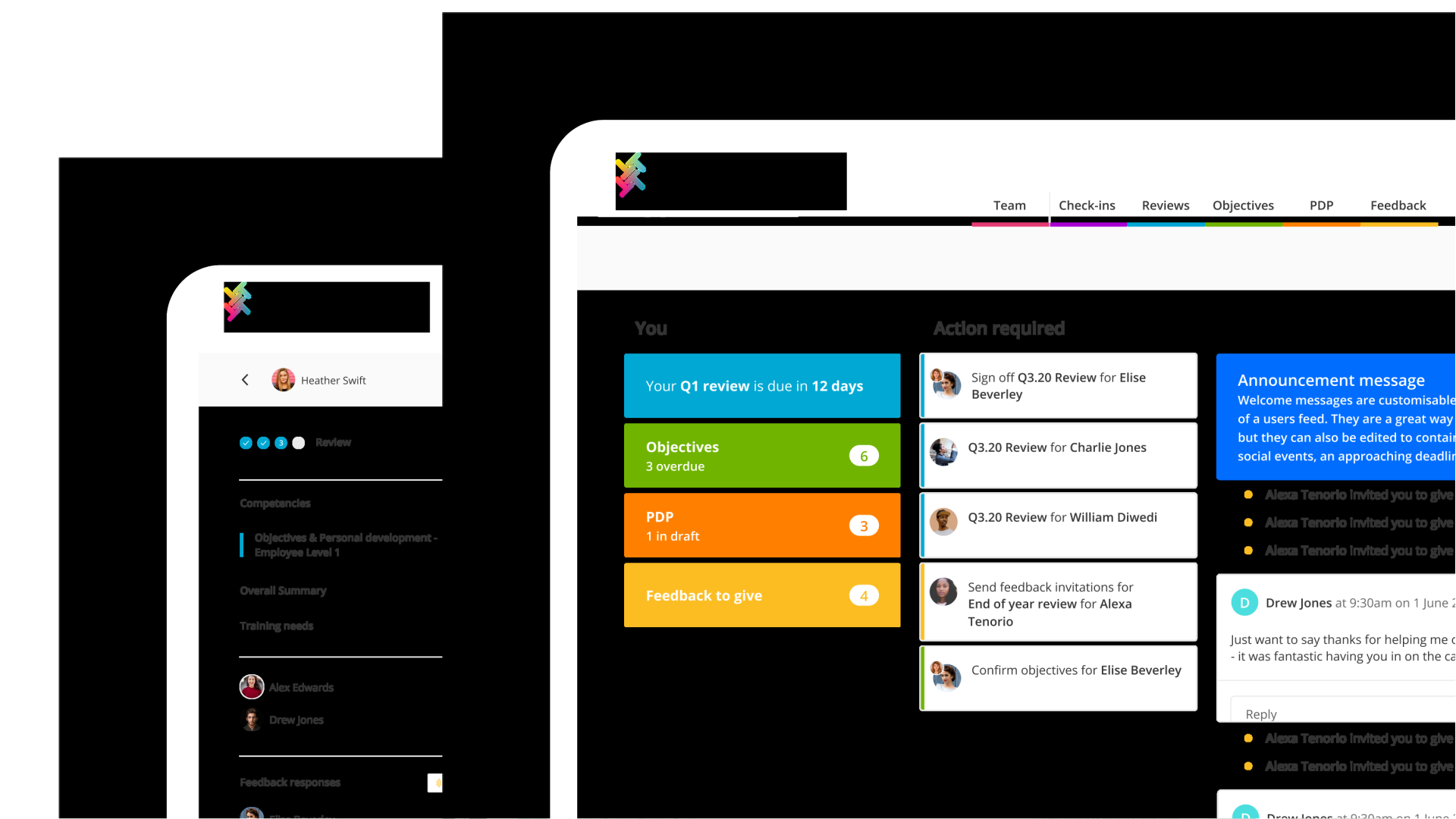
Our software is designed to provide support at every stage of the employee lifecycle to enhance goal setting, track day-to-day performance clearly, and facilitate better review conversations. Recognise success and generate advanced performance reports in one central location with Talos Perform. Contact us to get started today.ment.

Catarina Mendes