
21st October 2021 4 MIN READ •Talos ATS •Recruitment Trends

Cognitive recruitment strategies are becoming a popular way for employers to assess the competence and compatibility of their candidates. Here we go through the ins and outs of cognitive recruitment, including what it means, and how you can use it to hire strong new talent…
What is ‘cognitive recruitment’?
‘Cognitive recruitment’ refers to the use of practical assessments to identify the strength of candidates’ skills and abilities in various different areas. This provides recruiters with qualitative data, giving them an insight as to how well candidates fit their hiring criteria.
What are the advantages of cognitive recruitment?
Cognitive recruitment strategies come with a number of advantages for employers. The increased focus on practical compatibility leads to data-driven hiring decisions, helping you to choose the perfect fit for the role in question. This can lead to:
- Further productivity and innovation within your workforce
- Higher staff retention due to increased compatibility
- Promotion of diversity & inclusion due to skills-based hiring
Assessing candidates’ learning abilities helps you to map out the future of your workforce, highlighting areas for development on top of their existing skills.
What are some cognitive recruitment strategies?
There are a number of cognitive recruitment strategies commonly used by employers. Here’s how you can assess your candidates’ cognitive abilities to promote data-driven hiring decisions…

1- Verbal reasoning assessments
Verbal reasoning assessments are a simple and effective way to gauge candidates’ analysis and problem-solving abilities. These usually take the form of a written statement followed by a multiple-choice question.
For example:
“Employers need to focus on job satisfaction in order to attract compatible candidates. A recent study by Talos360 found that 70% of candidates would choose a lower paid job role if it seemed to be more fulfilling. This further disproves the common misconception that ‘cash is king’. Candidates are, on average, more interested in day-to-day job satisfaction.’
Which of the following statements is true?
- Employers must increase salary levels in order to attract more candidates
- Job-seekers are hungry for greater career satisfaction
- The majority of candidates focus on salary over job satisfaction”
These tests are a useful way to assess candidates’ attention to detail – often an important factor when hiring for administrative, office-based roles.
2- Numerical reasoning assessments
Numerical reasoning tests are used to assess candidates’ ability to comprehend mathematical problems. This is particularly useful when hiring for data-driven occupations, where recruits would be required to use numerical problem-solving in their everyday roles.
Candidates are shown a collection of data – usually in a visual format such as a chart/graph. They are then asked to answer a number of questions based on this information, such as: “What was the total value of new car sales between July and October?“
This is often more effective than qualification-based hiring, assessing candidates’ ability to apply their knowledge to everyday professional situations.
Even the most ‘qualified’ candidates may struggle to apply their knowledge. Using cognitive assessments such as this promotes a level playing field for all candidates, whether from an academic or strictly vocational background.
3- Learning agility tests
Learning agility tests can be used to assess a number of personal/professional qualities in recruitment candidates. This includes things like self-management, social skills, cognitive ability, innovation, and approach to research.
This usually takes the form of a questionnaire, targeting candidates’ unique views and approaches to different situations.
For example: “How far do you agree with this statement: “I react well to constructive criticism from my colleagues and team leaders”?“
In contrast to the previous examples, this focuses much more on candidates’ unique personal qualities than their professional abilities. This is a great way to gauge candidates’ compatibility with your workplace culture and team ethos.
For instance, if your company holds collaboration at its heart, you may want to assess candidates’ feelings towards teamwork. If candidates’ answers suggest that they work better independently, they may not be the most appropriate fit for your organisation.
4- Culture match surveys & assessments
Culture match surveys are another great way to assess candidates’ compatibility with your workplace values. These focus on the unique wants, needs, and expectations of your candidates, allowing for comparison with those of your existing employees.
For example, candidates may be asked about which workplace values/incentives they value the most – such as flexible working, learning & development, and staff social events. This information can be used to gauge compatibility with your more ‘informal’ company values. It’s always better to work alongside someone who complements your workplace culture!
It’s useful to survey your own colleagues before using culture match surveys. Identify your Employee Value Proposition (EVP), and use this as a benchmark to review candidates’ compatibility with your existing workforce.
If a candidate’s values don’t align with those of your existing employees, they’ll be less likely to engage with your team, and stay with you for the long run. Cultural compatibility is often overlooked when assessing applicants’ suitability for new opportunities.
Discover gamified culture-match surveys – an easier way to engage your colleagues and candidates: Talos Engage
Introducing…
Talos ATS: Recruitment made easy!
Want an easier way to manage hiring? Talos ATS is our all-in-one solution for in-house recruitment, making life easier for your HR team, and promoting an enjoyable hiring experience for candidates.
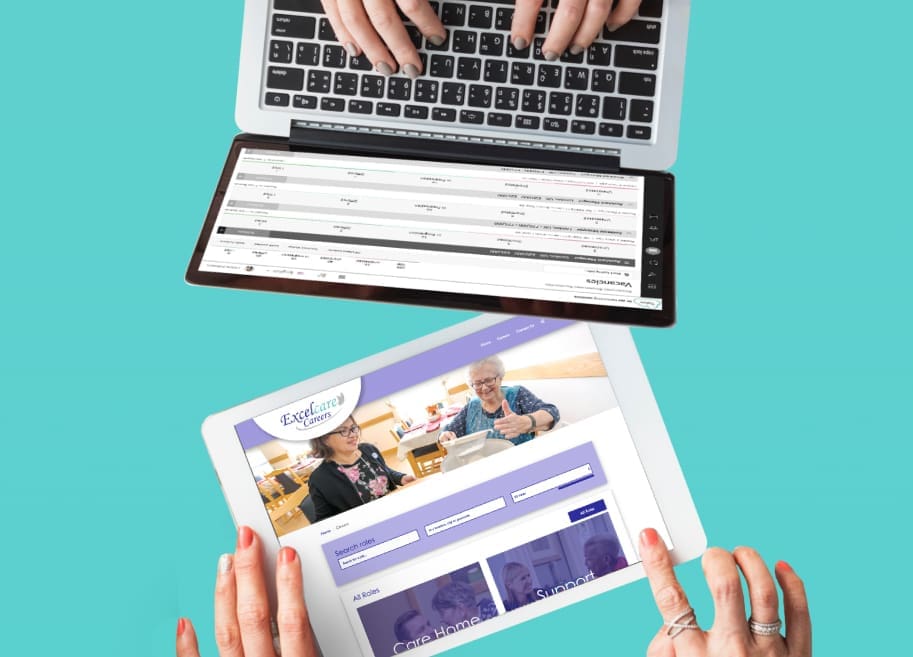
All-in-one digital hiring platform
Talos combines all the essential hiring tools into one user-friendly platform, giving your team a one-stop-shop for all of their recruitment needs, including:
- Multi-platform advertising suite
- Next-generation Applicant Tracking System
- Advertising optimisation tools
- Automated progression of your strongest applicants
- Automated communication & updates for candidates
- Video screening & interviewing for fast, accessible hiring
- Gamified culture-match – increasing candidate compatibility
- Simplified remote hiring & onboarding tools
Discover the easiest way to manage hiring – save time, cut costs, and reduce your reliance on recruitment agencies!