
3rd August 2021 4 MIN READ •Talos Engage •Employee Engagement

Remote working has become increasingly popular over the past few years. What was once an exclusive perk enjoyed by a small number of employees is now a common workplace benefit. Here we discuss the pros & cons of employees working from home, and discuss whether it’s right for your business:
Benefits of working from home
Remote working brings with it a number of benefits for both you and your employees. These include:
1- Supports employee autonomy
Working from home helps to promote autonomy in your workforce, giving employees more control over their workloads. This not only reduces pressure on you as their manager, but helps to drive creativity and innovation throughout your team.
An autonomous workforce is one that excels in problem-solving, professional development, and peer-to-peer support. This helps your business to achieve new goals, while allowing your employees to prosper in their careers.
2- Time and space for wellbeing
When used in moderation, remote working is a great way to boost mindfulness and wellbeing in your workforce. Working from home gives your employees more personal space away from the office environment, which many individuals find beneficial.
While the classic office environment is great for collaboration, allowing some degree of remote working gives employees breathing space to focus on their own responsibilities.
Giving your employees the choice between at-home and in-office working allows them to take a break from the high-pressure environment when needed.
3- Increased productivity
One 2020 study showed a 47% increase in productivity amongst remote workers – highlighting the day-to-day benefits of working from home.
It’s worth considering remote working initiatives if your team finds the working model more productive. Who wouldn’t want a more productive workforce?
4- Removing the need to commute
The absence of a lengthy morning commute is one of the key advantages of remote working. This not only helps to boost employee morale, but actively reduces your company’s carbon footprint!
Working from home gives your employees more personal time before and after work, leading to a healthier work-life balance.
5- Allowing flexibility for parents & carers
Remote working particularly benefits employees with caring responsibilities. In times such as school holidays, it can be challenging for parents to balance the demands of work and family life. Working from home gives them the flexibility they need to provide childcare, while continuing to complete their required hours.
It isn’t just parents who benefit from the flexibility of remote working. Employees with elderly or physically impaired relatives are also able to fulfil their caring responsibilities more easily.
Drawbacks of remote working
While remote working does boast its share of benefits, there are a few challenges to consider before pursuing a work-from-home model:
1- Can lead to employee burnout if improperly managed
Remote working can, unfortunately, lead to increased employee burnout, with colleagues working out-of-hours or avoiding contracted breaks.
The absence of the collaborative office environment often reduces employees’ ‘work and play’ balance – leading to overworking.
This can be avoided by hosting stand-up and stand-down meetings at the beginning and end of each day, giving employees more structure to their working routine.
2- May compromise communication
Communication can be difficult to manage when working from home. In terms of collaboration, nothing beats the face-to-face nature of the workplace.
This may lead to employees feeling disconnected from their colleagues, which can compromise team-led projects.
Ensure remote employees are kitted out with video communication and instant messaging tech, allowing them to interact with their coworkers when needed.
3- Could lead to micromanagement
Remote working can cause anxiety for managers and team leaders. A lack of visibility over teams’ workloads can lead to excessive micromanagement tactics.
Micromanagement is when team leaders become over-involved in their employees’ workloads, checking up too often, and often becoming invasive.
It’s important to have faith in your remote working employees, giving them the autonomy they need to manage their own responsibilities.
“Should I let my employees work from home?”
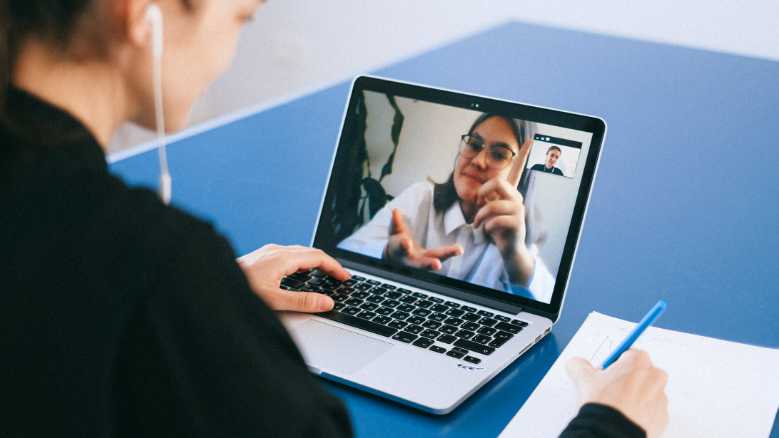
Remote working has numerous benefits for both your business and its employees. It’s definitely worth considering giving employees this flexibility; it’s a crucial part of developing a talent-winning EVP.
– Survey employees to identify their wants and needs
Poll your employees to gauge their thoughts on remote/hybrid working. If the results show an overwhelming trend towards working from home, it’s important to consider giving employees this freedom.
If your employees’ wants and needs are not met, they may start to look elsewhere for a more compatible employer. Building a strong EVP is a key part of promoting productivity and wellbeing within your workforce.
Learn more about Employee Value Proposition (EVP)
– Trial a ‘hybrid working model’
If your business remains undecided between at-home and in-office working, it may be worth trialling a hybrid working model. This gives employees a healthy balance between remote and face-to-face working, helping to manage the challenges while gaining the benefits.
This also gives employees the opportunity to choose between the two working environments, providing balance for those who sway towards/away from remote working.
Check out our free Hybrid Working Infographic
Introducing…
Talos Engage: Give your employees a voice
Want to meet your employees’ unique wants, needs, and expectations? This is a crucial part of building and retaining a happy, productive workforce.

Swipe right for a better workplace
Talos Engage is 360’s gamified employee engagement tool; employees simply play the game to tell you what they expect from working for your company.
This helps you to build an EVP that truly resonates with your workforce – driving productivity, wellbeing, and worker retention.
Talos Engage helps you meet employees’ wants & needs
When employees play the Engage swipe-card game, you gain an insight into their unique wants and needs in working for your business.
This is a great way to identify where your employees’ priorities may have changed, especially relating to corporate benefits and workplace culture.
Their feedback is formulated into a straightforward report, allowing your HR team to build a data-driven engagement strategy.
Discover an easier way to meet employees’ wants and needs, and retain talent for the long run: