
18th May 2021 8 MIN READ •Hiring Tips •Talos ATS
It’s often debated whether it’s more effective for employers to manage recruitment themselves or outsource hiring to recruitment agencies. Today we’ll settle the Recruitment agencies vs internal recruitment debate, and share the benefits and drawbacks of both external hiring agencies and internal recruitment teams, and shed light on why organisations might actually prefer a combination of external expertise and internal teams.

Table of Contents
What is in-house recruitment?
In-house recruitment means sourcing and hiring new talent using your internal resources – rather than outsourcing to staffing agencies. When hiring in-house, employers rely on the strength of their own employer brand and advertising strategies to attract suitable candidates.
What is a recruitment agency?
Recruitment agencies are hiring specialists, working to attract and hire new employees for their clients. They are made up of recruitment consultants, advertisers, and marketers – all focused on helping companies seek out new talent.
They also play a role in helping candidates find job opportunities, contacting individuals with desired skills, and guiding them through the hiring process. This can include CV editing/optimisation, and interview advice.
How does a recruitment agency work?
Recruitment agencies work by filling vacancies for their clients. Initially, a company will contact the agency with an available role. The consultants will then search through their existing applicant database, as well as online recruitment sites, to find suitable candidates for the role in question. They may also run advertising campaigns on the company’s behalf to promote the vacancy to more potential applicants. Upon finding suitable candidates, they will often arrange, and sometimes host interviews for the company – sending through the list of talent for their approval.
How much does a recruitment agency cost?
The cost of using a recruitment agency varies depending on the service the employer requires. This may also differ depending on whether the company is searching for temporary or permanent staff.
Typically, for permanent hires, the agency’s payment will follow either a contingency or retained method. In contingency, the recruiter will only be paid once the candidate accepts the job offer, with the cost amounting to a percentage of their first annual salary. With retained recruitment, an upfront fee for exclusivity often applies, followed by a charge upon receipt of shortlisted candidates, and a final payment upon successful hire.
Recruitment agencies vs internal recruitment
Recruitment agencies offer outsourced hiring services, ranging from candidate sourcing and screening, right through to interview and selection. They’re viewed as specialists in talent acquisition, and are a popular choice for companies large and small.
Recruitment agency benefits
- Often a quicker recruitment turnaround – Using recruitment agencies can provide a faster hiring turnaround than internal recruitment. This is because their consultants have access to advertising tools and talent databases – allowing them to source compatible candidates more quickly. Recruitment consultants are often able to allocate more time to the recruitment process than an internal HR department. Dedicated recruiters, and applicant tracking systems enable them to manage, screen, and progress candidates more quickly in many cases.
- Reduces work for your internal HR team – Another benefit using recruitment agencies vs internal recruitment is that it can reduce the workload of your internal HR team. This gives them more time to focus on other aspects of their roles, such as employee engagement and wellbeing. Recruitment consultants are typically able to allocate more time and effort to recruitment campaigns. This allows them to spread the work across their dedicated team – increasing efficiency in many cases.
- Access to a large talent pool – External recruitment agencies have access to a larger talent pool than you will have internally, with this pool including more people who are actively looking for opportunities. This is one of the key benefits of external recruitment, as it means you’ll have access to talented candidates who you’d never consider if you were only focusing on in-house recruitment.
Recruitment agency drawbacks
- Can often be more expensive than internal hiring – One drawback of external recruitment agencies is that they can often prove more expensive than effective internal hiring. They’re specialists in their field, after all, and may take high fees based on successful candidates’ first annual salary. With the increased availability of recruitment software, internal recruitment has become more cost-effective for many employers. This means that some companies may be paying above the odds when they choose to outsource hiring.
- Can reduce engagement with your employer brand – Another negative effect of outsourcing recruitment is the reduction in candidates’ engagement with your employer brand. Some hiring agencies may use unbranded recruitment advertising, and have less insight as to your unique brand values. This can lead to candidates becoming detached from your brand and its ethos, reducing the chance of sourcing truly compatible employees.
- Candidate experience not guaranteed – Another potential disadvantage of external recruitment is that your desired level of candidate experience isn’t necessarily guaranteed. Recruiters’ methods may not be aligned with your organisations culture and benefits, which may alter perceptions if your employer brand at a crucial stage. While you can provide external recruiters with the guidance on your preferences, they will have their own approach to meet their own targets. Bear this in mind before choosing which recruitment method to go with.
Pros and cons of in house recruitment vs agency recruitment
Recruitment technology and modern HR strategies have made it easier than ever for employers to recruit in house. This relies on your HR team running most or all aspects of the recruitment process – from sourcing candidates, to onboarding new-starters.
In-house recruitment benefits
- Increases engagement with your employer brand – Centralising recruitment improves candidates’ engagement with your unique employer brand; who knows your brand values better than your own HR team? Their knowledge and passion for your company’s values help to boost your brand reputation to potential candidates. Another benefit of recruiting internally is that it gives you full control over every aspect of the hiring journey – from job advertising, right through to interview and onboarding. This means you can ensure the best possible candidate experience, boosting the reputation of your employer brand throughout.
- Culture alignment – One of the main benefits of recruiting internally over using an external recruitment agency is that you can make sure the entire hiring process is aligned with your culture – something that isn’t always the case when you outsource hiring. What’s more, allowing existing employees to apply for open roles supports employee development, and means candidates are already aligned with your culture.
- Cheaper and more effective with the right tools – In-house recruitment software such as applicant tracking systems (ATS), advertising suites, and onboarding portals has made it possible for employers to deliver efficient, cost-effective recruitment. With the right tools, you can provide both candidates and hiring managers with a positive recruitment experience – saving time and cutting costs. This reduces your reliance on recruitment agencies, while ensuring your team is capable of delivering recruitment easily while managing other aspects of HR.
- Promotes well-informed hiring decisions – Managing your recruitment process internally promotes positive, data-driven hiring decisions. Your team gains full visibility over candidates’ performance at every stage of the process, enabling them to assess compatibility more effectively. You know your own perception of an ‘ideal candidate’ – recruiting internally allows you to align this vision with your hiring practice. This means focusing on attracting the kind of candidates you want to hire, and assessing their compatibility thoroughly.
- A people-focused approach – External recruitment methods are typically fuelled by a sales-focused, commission-driven approach, so they won’t always be aligned with your organisation’s culture and values. One of the top benefits of in-house recruitment vs agency hiring is that it allows you to make sure you’re leading with a people-focused approach that fully aligns with your employer brand and company culture.
In-house recruitment drawbacks
- It may take longer to recruit new employees – A potential disadvantage of internal job recruitment is that it may take longer than outsourced hiring. While this is not always the case, smaller HR teams may prove less effective in delivering recruitment without the right tools and practices. Recruitment agencies can often allocate more time to hiring campaigns than internal hiring managers. This means they may be able to screen and progress candidates more quickly.
- Requires a strong recruitment advertising strategy – Successful advertising strategy is a crucial aspect of recruitment; it’s essential for attracting the right talent, while promoting your employer brand. Hiring internally requires a strong understanding of recruitment advertising – such as which platforms/tools to use, and how to build successful campaigns. This can, however, be picked up effectively by staying in-line with hiring best practice, and boosting your employer brand’s digital presence. Tools such as social media and industry-specific job boards are a great way to get the hang of recruitment advertising.
What is the best software for in-house recruitment?
There is a wide range of software available to make in-house recruitment easier. This includes…
Applicant Tracking Systems
Applicant Tracking Software (ATS) is one of the most popular tools for in-house recruitment teams. These platforms allows you to manage candidates through every step of their hiring journey – enabling automated data collection, simplified progression stages, and secure data storage. Using an ATS makes it easy to stay up to date with every applicant across all of your vacancies. This means you can deliver a high-quality hiring journey without putting pressure on your HR team.
Job Advert Posting/Scheduling Suites
Job ad posting suites allow employers to manage vacancies across multiple online platforms at once. This makes it easier to attract the most compatible talent in your sector, while maintaining a cost-effective advertising strategy.
These platforms are great for managing vacancies across sites like Indeed and LinkedIn, without having to deal with each platform individually. Gone are the days of seeking out the most relevant platforms, and creating multiple accounts to upload vacancies. Job posting tools make it easier than ever to attract high-quality candidates for your roles.
Video screening & interview tools
Screening and interviewing applicants is a time-consuming task. Video communication tools make recruitment easier and more accessible for both you and your candidates.
Screening candidates virtually means you can process more applications in a shorter period, providing a quicker hiring turnaround for your business. Video interviewing provides flexibility for you and your applicants – meaning sessions can be hosted at any time, and from any location.
Performance management software
For in-house HR and recruiting teams, performance management software is another key piece of technology you’ll need to invest in. Performance management systems enable internal teams to review, develop and recognise talent within an organisation. Investing in performance management is key for any internal team to ensure you are retaining the top talent you’ve worked so hard to hire.
Tips for in-house recruitment teams
In-house recruitment is often perceived to be a difficult task. However, this doesn’t have to be the case! With the right tools and processes at hand, you can cut costs and save time by using your existing HR team to hire new talent. Here are a few tips for in-house recruitment teams:
1. Upgrade your HR tech toolkit
Make life easier for your in-house recruitment team by upgrading your HR tech toolkit. There are a number of accessible tools available to help you centralise your hiring process:
- Applicant Tracking Systems (ATS)
- Video screening/interview software
- SMS/Email automation assistant
- Recruitment advertising management suites
2. Embrace employee referrals
Embracing employee referrals makes it easier to source compatible candidates for vacant roles.
Incentivise employees for referring successful candidates. This can be achieved through cash bonuses, perks & benefits, or even simple recognition!
Employee referrals can also increase the cultural compatibility of new applicants. Who serves as better advocates for your employer brand than your own colleagues?
3. Define your unique employer brand
Identify the factors that make your employer brand unique. What makes employees choose you over any other employer?
By defining your unique cultural values, you can make your workplace more attractive to potential candidates. This will make it easier to attract more high-quality applications for your roles.
4. Centralise your recruitment advertising & applications
Centralise your recruitment advertising strategy by using a multi-poster to list new vacancies. Be sure to use your branded social media channels, as well as your company’s careers site to reach new candidates.
Make the application process as easy as possible by providing a one-stop-shop for all your opportunities. This can be achieved easily by connecting your careers page to your Applicant Tracking System (ATS).
Talos ATS: In-house recruitment made easy
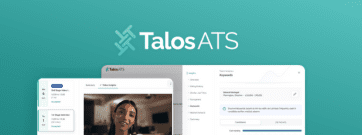
Want to reduce your reliance on recruitment agencies? Talos ATS gives you all the tools you need to deliver successful, cost-effective in house recruitment. Talos360’s applicant tracking system makes life easier for your HR team, while ensuring a positive experience for your recruitment candidates – boosting your employer brand.

The platform gives you access to all the tools you need to attract, manage, hire, and retain the best new talent:
- Next-generation Applicant Tracking System
- Multi-platform job-poster
- Recruitment advertising suite
- Video screening and interview platform
- Automated progression of your strongest applicants
- SMS/email update automation for candidates
- Remote onboarding tools
Start enjoying hiring; give your HR team the experience they deserve: