
9th May 2025 8 MIN READ •Resources
- Unbiased recruitment refers to the assessment of a candidate based solely on their skillset and ability to do a job, not taking into account factors such as their age, gender, race, sexuality, religion, or any other protected characteristic
- Best practice tips for ensuring unbiased recruitment include creating a clear, defined job spec, following objective criteria for interview progression, reviewing candidates fairly via scorecards, and using role-specific, standardised interview questions for each vacancy
- The benefits of unbiased recruitment include the opportunity to create a more diverse workforce, increase the number of applications received by top talent, and protect your employer brand
- Using an applicant tracking system, such as Talos ATS, can help companies to follow unbiased recruitment processes, by automating screening and standardising candidate assessments

Contents
What is unbiased recruitment?
There have been plenty of studies undertaken over recent years that suggest bias, conscious and unconscious, as well as discrimination remains prevalent in the hiring process. To counteract this prevalence, more and more HR departments from companies of all shapes and sizes are tuning into the practice of ‘unbiased recruitment.’
But what is unbiased recruitment? Unbiased recruitment is the practice of assessing a candidate purely based on their skills and ability to do a job, eliminating any other factors such as gender, age, race, etc…
“More explicitly, ‘unbiased recruitment relates to the removal of criteria that could unintentionally bias managers while giving under-represented groups confidence their application will be fairly considered.”
Confederation of British Industry
Can bias be fully removed?
‘BIAS: A tendency to believe that some people, ideas, etc., are better than others that usually results in treating some people unfairly.’ Merriam-Webster Dictionary Bias: Dictionary definition
It’s considered extremely difficult to fully remove bias from the wider recruitment process since we all have inbuilt unconscious bias; tending to lean towards what we know and are comfortable with.
However, by understanding the various types of conscious and unconscious bias, HR can take positive steps to remove as much of it as possible from the recruitment process.

Types of bias and their impact on recruiters
Being human, we’re hardwired to make quick decisions. And as recruiters, we’re told repeatedly to ‘trust our gut’. However, when we intuitively select a candidate, we rely on irrelevant factors such as emotion, intellect and the factors of that individual’s makeup, some of which are listed below, instead of focusing on capabilities.
The consequence of which, can often lead HR unknowingly into ‘bias’ traps. Outside the most common forms of bias – age and gender – here are six common types of bias and their impact on recruiters…
1. Similarity attraction bias
The desire to surround ourselves with people we like and have a rapport with is a strong one. Recruiters share this desire too, which can influence the decision-making process.
2. Conformity bias
Conformity bias is based on a famous study, the Asch Experiment, that showed how decision-making can be affected by group peer pressure. As a such, recruiters must be aware of the sway others can have on their decisions about a candidate.
3. Affinity bias
Akin to similarity bias, affinity bias is very prevalent in recruitment. When recruiters feel a natural affinity towards a candidate due to commonalities such as hailing from the same town or having attended the same school, more often than not, it will affect the final decision.
4. Beauty bias
Our brains are hardwired to consider beauty synonymous with success. Consequently, beauty bias is an incredibly common trap for recruiters to fall into. Overconfidence bias When the recruiter is overconfident in their abilities to spot the ‘good’ candidates from the supposed ‘bad’ ones, they have unwittingly allowed confirmation bias to creep in to justify their decisions.
5. Confirmation bias
When a recruiter makes snap decisions based on perceived truths, often, they’ll try to justify this bias – either consciously or subconsciously. This will manifest in irrelevant questions which are designed to elicit answers that support their initial assumption about the candidate.
What are the business benefits of unbiased recruitment?
- A fairer recruitment process: Implementing unbiased recruitment ensures a business hires candidates based on merit rather than gender, race or any other distinguishing characteristic.
- A more inclusive and diverse workforce: Research conducted by Gartner suggested that the more diverse a workforce is…The broader range of perspectives a business will have – businesses will better understand their customers, team performance will improve and the more likely a business is to retain top talent
- An enhanced company reputation: Inclusive companies are far more likely to possess a welcoming environment which in turn engenders higher productivity and growth.
- Increased applications from top talent: An enhanced company reputation will naturally place a business ahead of the queue when competing for top talent.
- Improved employer brand: A company that hires on merit is building a framework for innovation, success and growth. Though intangible – an employer brand becomes tangible when thriving employers elevate it through advocacy.
‘’By removing the candidate’s name and other personal information, such as their nationality or the university they attended, we aim to ensure that people will be judged on merit and not on their background, race or gender.’’
John Manzoni, CEO, Civil Service
Unbiased recruitment techniques
To ensure HR and hiring managers remove bias from the hiring process, businesses can turn to a range of unbiased recruitment techniques to help achieve a merit-based recruitment process…
1. Consistent hiring process
A well-structured and consistent hiring process is an absolute necessity if businesses are serious about ensuring every applicant receives the same experience.
Tim Clifford, Talos360 Talent Insights Specialist, explains: “A consistent hiring process will minimise the potential impact of unconscious bias, while allowing each candidate to display their merit-based skills and aptitude. In addition, this approach is far more likely to protect your business against potential discrimination claims.”
Our best practice tips:
- Create a clear and defined job spec
- Identify objective criteria for interview progression
- Review all applicants against set criteria (see scorecards below)
- Utilise a role-specific, standardised, interview question deck
- Track and audit your hiring to look for any areas for improvement
2. Unbiased job ads
Unfortunately, it’s easy to unintentionally deter skilled candidates by using exclusive language in job ads. Often, businesses will unknowingly use gendered job titles, such as waitress or repairman, which can immediately alienate a huge portion of potential applicants. Adjectives and adverbs used in job adverts can also convey a gender bias.

Using AI-powered job ads, companies can now check for gendered language either in their job titles or within the body copy of their job ad. Keeping copy free from bias will ensure vacancies appeal to a more diverse pool of talent.
By utilising AI to create unbiased job ads, HR will:
- Promote inclusivity
- Help attract talent based on experience, skills and potential
- Increase pipeline diversity
- Access talent from diverse pools
- Promote a fair and equitable hiring process from the off
3. CV redaction
CV redaction is a massive leap forward toward unbiased recruitment. Companies can now remove information from a CV to negate some of the biases we’ve talked about above and help organisations promote an unbiased shortlisting process.

Here are some examples of information that HR can redact from a CV…
- The removal of names
- Removing dates (not just the date of birth but years spent in education or the year of the very first role – removal of such info avoids people ‘guessing’ a candidate’s age) – limiting age bias
- Redacting locations of educational institutions – limiting racial/ethnicity bias
“Employees who feel their organisation is inclusive are three times more likely to be happy in their job” Boston Consulting Group
4. Skills based hiring
Prioritising skills-based hiring, in the form of candidate assessments – over education, places merit-based recruitment above a traditionally hyper-focus on educational background or work history.

Additionally, skills-based hiring is a great way for HR to tap into a talent pool of candidates with a wealth of transferrable skills. With candidate assessments, HR can circumnavigate bias by leveraging skills-based data that will better inform a candidate’s:
- Overall ability and aptitude
- Skillset for role suitability
- Personality traits
- Situational judgement skills
- Core skills
- Transferrable skills
- Causes for motivation
- Resilience
- Learning agility
5. Create a diverse hiring team
Companies might consider creating diverse hiring teams from various backgrounds to mitigate unconscious bias. In so doing, companies benefit from multiple perspectives and are far less likely to fall into conformity bias.
With a diverse hiring team, HR will increase the objectivity of hiring decisions and reduce the likelihood of conformity bias.
6. Balanced scorecards
Whether an organisation asks for a CV or prefers application forms, utilising scorecards to assess either will ensure each candidate is assessed based on the same criteria.

For example, assessment criteria on a scorecard could look like this: ‘Does the candidate display evidence of transferable skills?’
- Yes, Strong Evidence
- Yes, Some Evidence
- No, Limited Evidence
- No, No Evidence
Using scorecards in conjunction with CV redaction, hiring managers can effectively progress candidates throughout the hiring process while reducing potential workplace bias. In addition, scorecards are a great way to ensure all candidates are assessed equally and to demonstrate a fair recruitment process
7. AI interview transcription
With video interviewing now a ubiquitous part of the hiring process, it’s necessary that HR ensures consistency of process while eliminating the possibility of bias. Enter AI interview transcriptions. With this new tech – know round here as Interview Insights – HR can review questions, language and terminology interviewers use to highlight any bias.
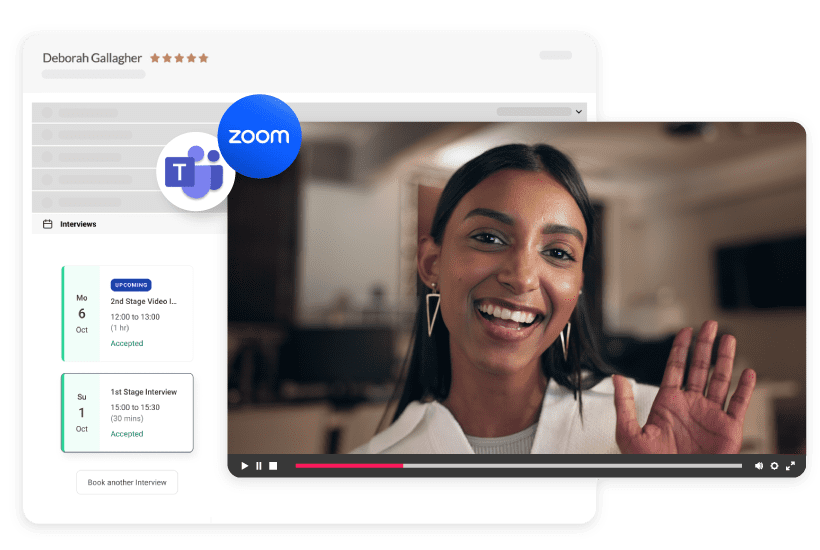
Thanks to this constructive feedback, HR will foster a fairer hiring process, guaranteeing hiring consistency. In addition, this tech provides a full recording and transcription of the interview, eliminating the need for manual note-taking while reducing legal risks associated with disputes over the hiring process.
With access to this latest tech, HR can:
- Improve interview quality
- Monitor the balance of conversation between interviewer and interviewee
- Evidence fair hiring
- Improve compliant hiring
8. Unbiased recruitment reports
As with the selection/shortlisting phase of the recruitment process, reporting is essential to the total success of your unbiased recruitment efforts. With the right reporting features, HR can understand how their unbiased recruitment efforts attract applicants with the right skill set irrespective of age, gender, ethnicity or any other bias.
Unbiased recruitment reporting can also help identify any stages in your recruitment process where bias could influence your hiring decisions. For example, HR may want to review its process if HR regularly receives a 50:50 male/female application ratio, but only 5% of males make it to the final interview.
9. Talent Analytics
Talent analytics can help HR obtain market insights from billions of data points. From these insights, HR can identify the available pool of candidates at the beginning of the recruitment process vs the applications received. Access to this data will help identify potential biases hidden within the job and post-recruitment and onboarding process.
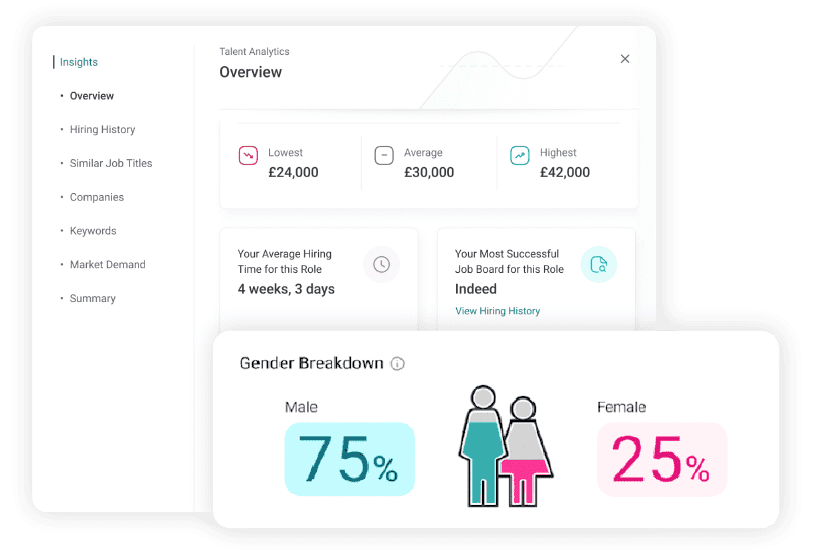
Tapping into this data at the beginning of the hiring process, HR can now:
- Enable a skills-based talent acquisition approach rather than focusing on previous job titles
- Access real-time demographic breakdown of the available talent pool
- Benchmark hiring against the realistic demographic population available per role
- Expand their talent pool by testing different job titles
Unbiased recruitment from Talos ATS
Reduce bias and standardise your recruitment process with our intuitive applicant tracking system.

Our award-winning ATS has features designed to hiring professionals reduce bias in recruitment and hire the right people for their roles. These include:
- Automated CV screening tools
- CV redaction
- Tools to help define your employer brand
- Easy-to-use, accessible career site builder to showcase your employer brand
- AI job ad writing assistant to write bias-free ads
- Automated DBS and other reference checks
- Video interviewing tools to standardise the interview process
- Intelligent interview insights to reduce interviewing bias
- AI-powered talent analytics to find the prefect candidate