

30th August 2022 5 MIN READ •Talos ATS •Hiring Tips

CV screening is a time-consuming task. CV is actually short for ‘Curriculum Vitae’, which is Latin for ‘Course of Life’, so it’s no surprise that there’s a lot to take in from such a small document.
But with CV screening software and by asking certain CV screening questions, the task can be made significantly faster. Read on to discover everything you need to know about how to screen a CV quickly and efficiently to benefit your organisation’s overall time to hire.
What is CV screening?
CV screening, sometimes called resume screening, is the process of analysing a candidate’s CV to assess whether they are suitable for the role they have applied for. CV screening typically takes place when all applications have been received, before interviewing takes place. CV screening software can be used for this task, or it can be carried out manually by HR staff.
Understanding how to screen a CV effectively can potentially save your organisation time and money, as you’re less likely to invite unsuitable candidates to the interview stage.
Can you use AI for CV screening?
Using AI for CV screening is becoming increasingly common as technology advances. If using AI for CV screening, bear in mind that some tools can show bias towards certain groups, so it’s still advisable to scan some resumes manually to monitor this.
What makes a good candidate CV?
Every hiring manager will have their own CV preferences, but there are some attributes to look for taht are usually signs of a strong CV:
– Tailored to your role/industry
A great CV should be tailored to the role and industry it’s being submitted for. As a hiring manager, you need to know why candidates perceive themselves as a good fit for your specific vacancy.
Tim Clifford, Talent Insights Specialist at Talos360, says: “Look for context – has the candidate made clear links between their skills and the role’s requirements? Have they expanded upon any of the fundamentals listed in your job ad? Keep these questions in mind as you sort through the pile.”
– To-the-point (no waffle)
The strength of a candidate’s CV can rarely be determined by its length.
Whether you’re faced with one, five, or 50 pages of your candidate’s background, the key thing to look for is relevance. If the bulk of their CV is irrelevant to the role in question, it’s likely that they haven’t tailored it for your specific vacancy.
– A personal sales pitch
Above all, a great candidate CV should serve as a sales pitch for their skills and professional qualities. You shouldn’t need to draw abstract links to assess their compatibility – this should be made clear for you!
By the time you reach the end of their CV, you should have a strong idea of their suitability. More in-depth questions may remain, but these can be covered in the interview stage.
Hiring Checklist:
CV screening checklist
When faced with a pile of applications, it can be difficult to judge the strength of every single candidate CV. Here’s our checklist of features and attributes to keep in mind when screening applicants:

1 – Their values & expectations
Cultural compatibility is one of the most crucial factors to consider when hiring new talent. If your workplace culture or practices don’t align with a candidate’s expectations, you’re unlikely to benefit from their full creative potential.
Look for these expectations within their CV. What do they value most in their career – is it the autonomy, collaboration, or the level of flexibility? This will give you a good idea of their suitability for your unique workplace and team culture.
2 – Their experience (paid, unpaid, and pleasure)
Experience is a virtue; for many of us, it’s the main focus of our CV/supporting documents.
However, this information is rarely limited to the ‘employment history’ section of a CV. Candidates’ hobbies, pastimes, and habits are also a great source of applicable experience.
Dive deeper than the ‘professional experience’ section. Look to candidates’ intros, bios, education, or volunteer placements to identify even more valuable traits!
3 – Skills, strengths, and learning opportunities
Let’s face it: you’ll very rarely find a candidate who ticks every box. We all have our own strengths and weaknesses – what matters is their relevance, and our willingness to expand our skillset.
Consider these CV screening questions to help you determin whether an applicant should progress to the next stage: how do candidates’ skills align with the role’s key requirements? are they a jack-of-all-trades, or a master of one or two?
While some candidates may lack experience in key areas, this doesn’t mean they won’t develop into an ideal fit for the role. Consider quality as well as quantity when it comes to candidates’ professional attributes.
4 – Education, training, and motivation
Knowledge and experience go hand-in-hand in forming our professional skillset. Assess your candidate’s education or training history in detail. Pay attention to both formal qualifications and informal training.
It’s important to note that degrees and qualifications aren’t the be-all-end-all when it comes to sourcing compatible talent. Experience, training, and part-time courses go just as far to developing an individual’s skillset.
6 Key CV screening questions to consider
There are some key CV screening questions to consider, whether you’re manually screening CVs or using software for the task:
1. Are the candidate’s skills tailored to the specific role and industry?
2. Is the CV padded out with waffle or ‘fluff’? If so, this could indicate that the applicant doesn’t understand the role being advertised, or that they don’t have the required skills.
3. Are the applicant’s values clear? Can you see what they’d like to get out of the role?
4. Has the candidate outlined their paid, unpaid and pastime experience?
5. Has the applicant detailed their skills and strengths, as well as areas they would like to learn more about?
6. Is the candidate’s education, training and motivation clear?
If you’re satisfied with the answers to each of these CV screening questions, you may want to progress the applicant to the interview stage. Thinking about each of these points early on in the application process can help to improve candidate suitability, and potentially save time and reduce recruitment costs further down the line.
Introducing…
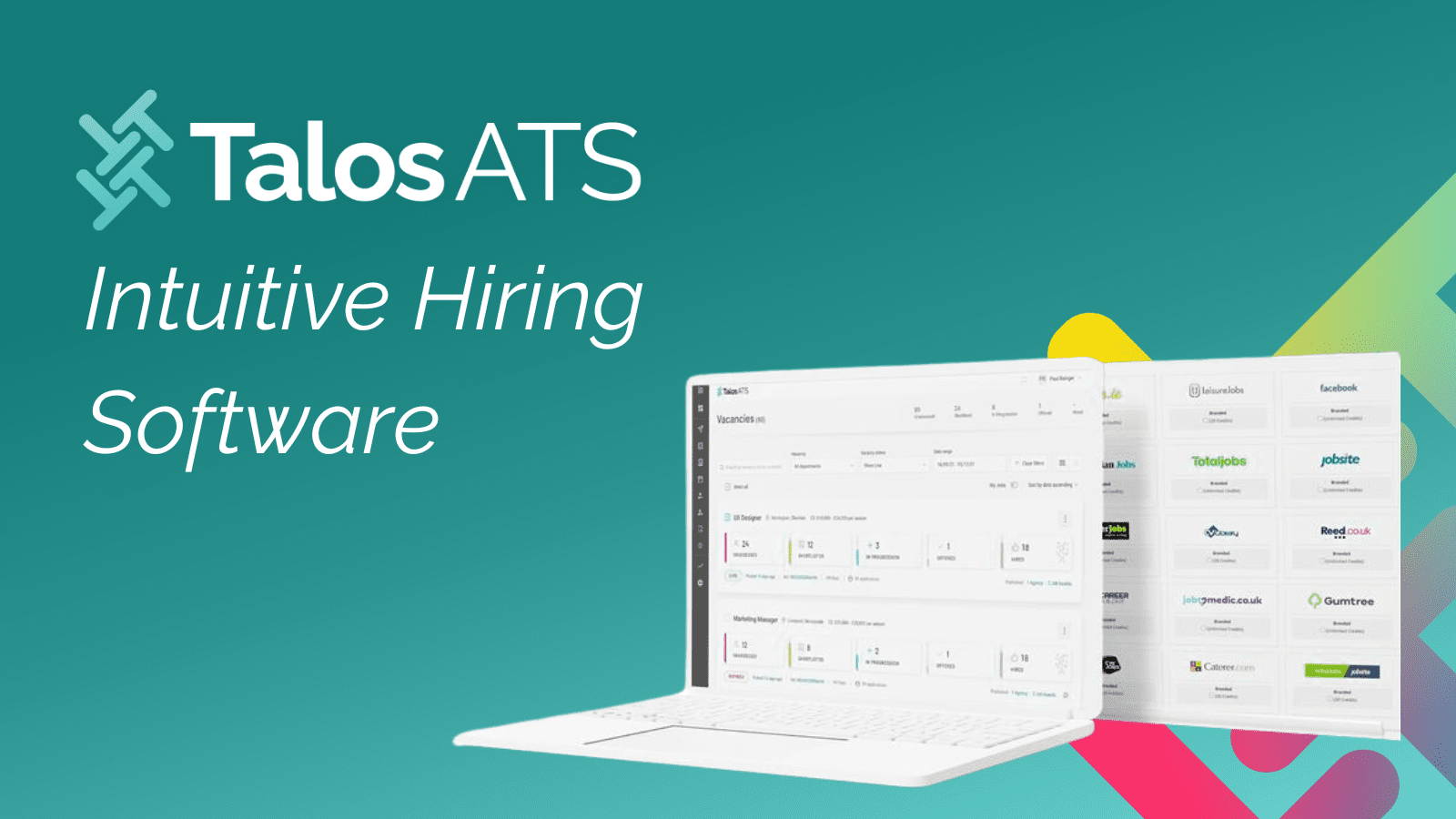
Talos ATS: Automated CV screening software
CV screening and keeping candidates engaged in the hiring process is a time-consuming task, which is why we’ve introduced intelligent screening automations to our applicant tracking system.
Talos ATS is our all-in-one solution to in-house recruitment, making it easier than ever to attract, manage, hire, onboard, and retain the best new talent.
CV screening software benefits
Our intelligent automated CV screening software identifies and priorities your most compatible candidates from the moment they apply. This saves a huge amount of time for your HR team, while promoting positive, data-backed hiring decisions.
With Talos, you gain access to an intuitive applicant tracking system, recruitment advertising suite, and virtual interview room – all compiled into one user-friendly dashboard.
Talos ATS includes:
- Next-generation Applicant Tracking System
- Multi-platform job-poster
- Automated progression of your strongest applicants
- Recruitment advertising suite
- Video screening and interview platform
- SMS/email update automation for candidates
- Remote onboarding tools
Discover an easier way to manage hiring. Cut costs and save time with Talos ATS as your CV screening software:
TLDR: In Summary
Reviewing and screening candidate CVs can be a time-consuming process. Every recruiter has their own idea of ‘what makes a good CV’, but there are a few undeniably positive attributes to look out for when screening candidates:
Here’s what to look out for in a candidate CV:
- #1 – Skills tailored to your role/industry
- #2 – Straight to the point (no waffle)
- #3 – Expression of their values and expectations
- #4 – Paid, unpaid, and pastime experience
- #5 – Skills, strengths, and learning opportunities
- #6 – Education, training, and motivation