
28th May 2026 12 MIN READ •Resources •Talos Perform
Performance management has moved on, and it’s time for your business to move on, too, with the right performance management software.
In this guide, we compare the main performance management tools that are currently available, including their pros, cons and price points. You can use our handy comparison table below to compare at a glance, or scroll down to read our in-depth analysis of each piece of software.
Key takeaways
- Performance management software helps businesses move away from once-a-year appraisals by introducing continuous feedback, goal setting and tailored employee development tools
- The best employee performance management software will depend on your company’s size, team structure and needs
- AI is a major feature of most of the platforms discussed, with tools now offering automated review summaries, coaching prompts, development plans and meeting support
- Some platforms are better suited to SMEs and growing businesses, while others are specifically designed for enterprise organisations managing complex review processes across multiple locations
Many modern performance management systems now combine employee engagement surveys, recognition tools and people analytics alongside traditional reviews to create a more connected employee experience

Table of Contents
Best employee performance management tools
- Talos Perform
- Betterworks
- BambooHR
- 15Five
- Lattice
- PerformYard
- ThriveSparrow
- Culture Amp
- HiBob
| Tool | Best For | Best Feature | Price (per employee per month) |
|---|---|---|---|
| 1. Talos Perform | Medium to large UK businesses | AI-powered review meeting preparation and scheduling | From £7.90 |
| 2. Betterworks | Large-scale businesses with multiple locations | Continuous performance conversations and OKR alignment | POA |
| 3. BambooHR | Small to mid-sized businesses | Performance management with a full HR suite | From £12.50 |
| 4. 15Five | Mid-market businesses | AI-assisted review cycle set-up with strong manager coaching | From £8.20 |
| 5. Lattice | Fast-growing businesses | Career development and progression planning | From £8 |
| 6. PerformYard | Companies with complex review systems | Customisable workflows | From £3.70 |
| 7. ThriveSparrow | Fast-growing global businesses | Organisation-wide reporting and AI analytics | From £1.50 |
| 8. Culture Amp | People-first organisations | Integration between employee engagement insights and performance management | POA |
| 9. HiBob | Fast-growing and hybrid businesses | Modern, social-style employee experience built directly into performance management | POA |
9 best performance management software platforms
1. Talos Perform
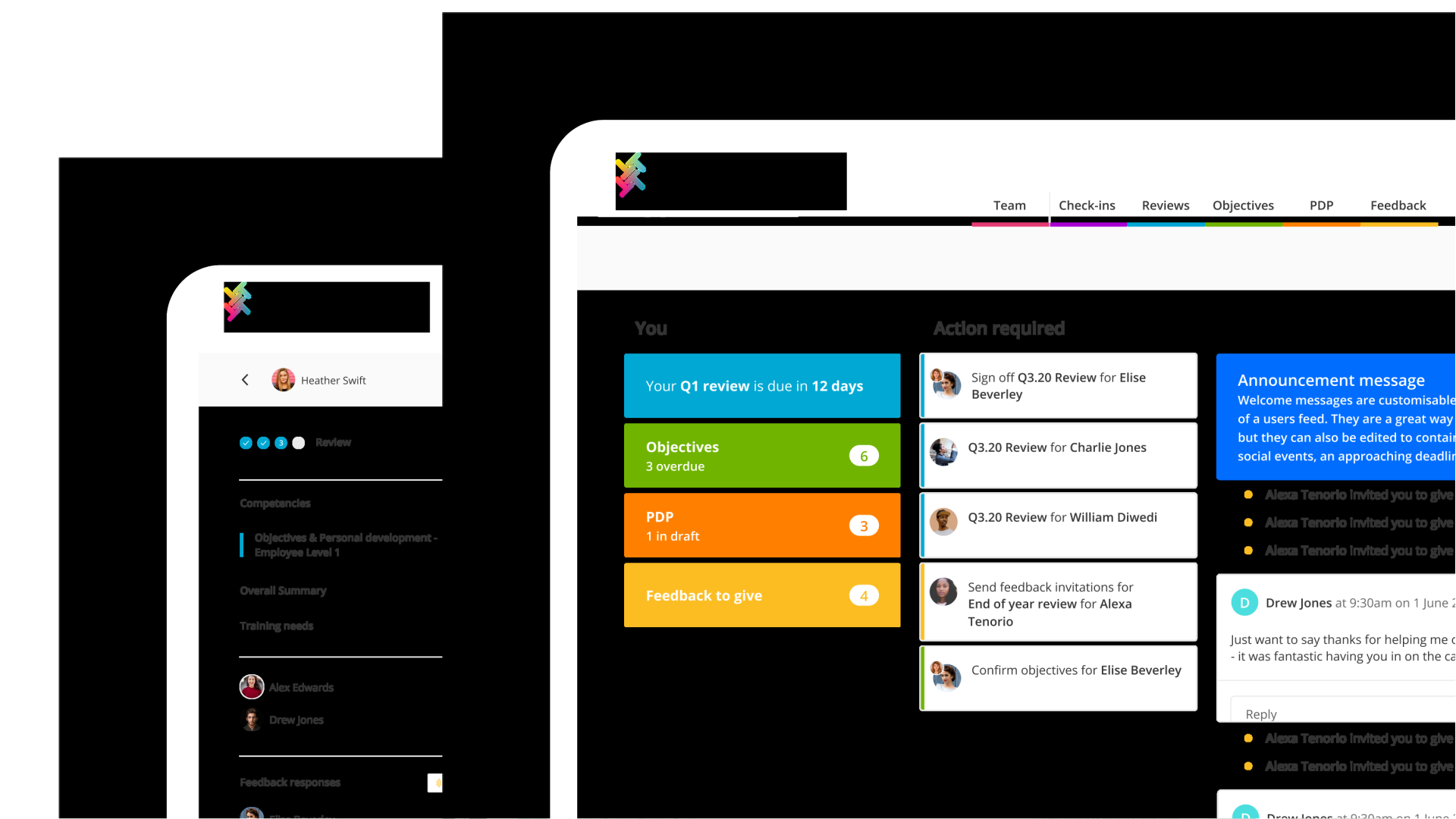
Talos Perform is a UK performance management platform that’s built for organisations who want more than just a tick-box reviews process. Powered by an ethical AI assistant (Tali), it’s one of the best performance management tools on the market, as it covers everything from goal setting to structured review meetings.
Best for medium to large UK businesses
Talos Perform is the strongest fit for mid-to-large UK businesses with established HR functions who are looking to use a system that puts all their performance tools in one place. It can manage high numbers of employees, turning a time-consuming annual exercise into a more manageable, continuous task.
Pros of Talos Perform
Talos Perform’s real-time goal tracking allows managers and employees to monitor progress against set objectives throughout the year. It also allows goals to be set in whatever format is best for the business, and cascaded down from the top of the organisation to each individual. This provides employees with clarity around how their day-to-day work impacts the wider company.
Other top performance management software features of Talos Perform include:
- Ready-made review templates
- Customisable workflow automations
- Employee development support via personal development plans (PDPs)
- Automatic scheduling, invitations and reminders
- Secure notetaking
- In-the-moment peer feedback
- Intelligent performance reporting
- Seamless integrations with HR tools and Microsoft tools with Single Sign-On (SSO)
Cons of Talos Perform
Talos Perform doesn’t currently feature a survey tool, which some companies may require.
Pricing
Talos Perform pricing is available on request. Talos Perform pricing is based on the number of employees and is billed annually with a 2-year minimum contract. Talos Perform pricing starts at £95 per employee and is suitable for businesses with 200 to 1000 employees. Please contact the Talos360 team to find out more about our pricing. A free demo is available before you sign up.
2. Betterworks
Betterworks is a performance management platform that’s built around the idea of continuous growth. It offers tools that keep managers and employees focused on shared goals throughout the year, while its core product, Conversations, is designed to make ongoing performance dialogue the norm.
Best for large-scale businesses with multiple locations
Betterworks is purpose-built for large organisations operating across multiple sites or regions, making it easier for managers and employees to maintain strong relationships even when they’re based miles apart. It’s best suited to enterprise HR teams managing complex review structures and high headcounts.
Pros of Betterworks
Betterworks matches performance management around goal alignment and OKRs, giving managers and employees a shared view of the priorities for every level of the business in a clear way. The system is able to embed feedback, check-ins and coaching into daily work, so the employee is always thinking about their performance, instead of forgetting about it until review time.
Other features include:
- Goals and OKRs with company-wide cascading and real-time tracking
- Structured 1:1 meetings with shared agendas, notes and follow-ups
- Continuous feedback and recognition tools
- AI-assisted goal writing, performance summaries and coaching prompts
- Calibration tools for fairer, more consistent review decisions
- Succession planning and skills intelligence
- Unified talent profiles bringing together performance, skills and growth data
- Smart analytics dashboards and people reporting
- Integrations with Microsoft Teams, Slack, Workday and other major HR and productivity tools.
Cons of Betterworks
Betterworks is built for larger, more complex HR operations, which is why some small and medium-sized businesses may struggle to reap the benefits. It also sits at a higher price point than many competitors.
Pricing
Betterworks pricing is available on request only. Businesses with at least 500 employees can apply for a mid-market quote, while organisations with more than 2,500 employees qualify for enterprise pricing.
3. BambooHR
BambooHR is a well-established HR platform, offering a full suite of tools that cover the complete employee lifecycle, from hiring and onboarding through to performance management and offboarding. While not necessarily a dedicated performance management system, its performance tools are useful enough to make it a strong option for businesses that want everything in one place.
Best for small to mid-sized businesses
BambooHR has been specifically designed for businesses with 25 to 1,000 employees. This makes it a great fit for small to mid-sized businesses that may have outgrown spreadsheet-based HR management, but don’t yet want to spend thousands of pounds on a full HR suite platform.
Pros of BambooHR
It might be considered one of the best HR performance management software options purely for its HR abilities, but when it comes to performance management, it can set and track employee goals, gather 360-degree feedback, and send self-assessments. It also offers a simple feedback process, where managers answer four core questions about the employee.
Some other top features include:
- Goal setting and tracking using SMART objectives, with templates and progress milestones
- 360-degree feedback, self-assessments and peer feedback tools
- Structured 1:1 meetings with scheduling, note-keeping and agenda tracking
- Custom performance review cycles with instant reporting
- Employee engagement surveys and eNPS tools
- Compensation planning tools with collaborative worksheets and salary band management
- Over 150 integrations with third-party tools including payroll, recruiting, benefits, and identity management platforms
- Mobile app for on-the-go access and approvals.
Cons of BambooHR
Performance management features are only available on the Pro plan and above, meaning businesses on the entry-level Core plan won’t have access to them without upgrading. The system also works best for companies with fewer than 350 employees, and its limited rules engine and custom workflow tools can restrict scalability for larger organisations.
Pricing
Businesses need to use the Pro or Elite plans to access the performance management add-on at a rate of $17 (£12.50) per employee per month for Pro, and $25 (£18.50) per employee per month for Elite, making it quite a bit more expensive than competitors.
4. 15Five
15Five is an AI-powered performance management platform designed to turn feedback data into actionable processes. Rather than treating performance reviews as a once-a-year exercise, it brings reviews, goal tracking, check-ins, engagement, and manager enablement together to form one system.
Best for mid-market businesses
15Five is best suited to mid-market organisations looking for a continuous feedback and performance management solution without the complexity of a large enterprise system. It works particularly well for businesses that have outgrown ad-hoc check-ins and spreadsheet-based reviews.
Pros of 15Five
The main pull of the 15Five performance review product is the Perform module, built to make review cycles faster and fairer. New cycles can reportedly be set up in under 15 minutes, and the AI assistant helps managers produce more objective, data-backed feedback with less effort. Reviews can be tailored for different departments or roles, while the platform’s calibration tools keep ratings consistent across teams.
Key features include:
- 360-degree feedback from managers, peers and direct reports
- OKR and goal management
- Structured 1:1 meetings with shared agendas, note-taking and follow-ups
- Weekly check-ins and continuous feedback tools
- Kona AI Meeting Assistant for automatic note-taking during 1:1s
- Growth Studio for individual development plans (IDPs), PIPs and succession planning
- Manager Effectiveness Indicator (MEI) to track and develop leadership performance
- Integrations with leading HRIS platforms, as well as Slack, Microsoft Teams, Jira and Salesforce
Cons of 15Five
Its reporting capabilities are limited for larger businesses that require deeper data analysis. There are also limitations around customisation, with less flexibility in reports and dashboards. The AI summarisation technology for reviews is considered less mature than what competitors can offer.
Pricing
Their most basic plan, the Engage plan, costs $4 (£3) per employee per month. However, for more advanced features, most businesses would require the Perform plan at $11 (£8.20) per employee per month.
5. Lattice
Lattice is an adaptable performance management platform that combines flexible review cycles and AI-powered insights into one connected system.
Best for fast-growing businesses
Lattice is particularly well suited to growing companies that are managing performance across multiple teams, departments or even locations. Its automation and AI-powered tools help managers work more efficiently without sacrificing quality, and it’s built to work for UK, US and international businesses alike.
Pros of Lattice
Lattice’s review cycle management is one of its strongest features. The cycles are completely customisable with automatic rules, or they can be adjusted manually mid-cycle to reflect changing business needs. AI feedback summaries help managers cut down the time spent on write-ups, while still producing meaningful, considered output.
Some other notable features are:
- Talent reviews to assess performance and potential for fairer promotion and succession decisions
- Structured PIPs built from HR-approved templates
- 1:1 meeting management with shared agendas and structured check-ins
- Weekly updates to keep managers and direct reports aligned
- Real-time feedback and praise tools
- Q&A boards for transparent, company-wide communication
- Goals and OKRs tracking
- Optional Grow add-on with competency frameworks, career tracks, and personalised IDPs
- Integrations with ADP, BambooHR, Google Suite, Jira, Microsoft Teams, OneLogin, Salesforce, UKG, Workday, and more
Cons of Lattice
While the costs seem average at first, they can increase quickly as extra modules are added. Some of the most valuable employee development tools, such as competency frameworks, career tracks and IDPs, sit behind the paid Grow add-on rather than being included as standard.
Pricing
Lattice pricing starts at $11 per employee per month (around £8) for the Foundations package, which includes performance management, plus goals and OKRs. The Grow add-on is an additional $4 (£3) per employee per month.
6. PerformYard
PerformYard is a performance management platform built around the idea that every company’s review process is different. Instead of imposing a fixed structure, it gives HR teams the tools to design and run reviews on their own terms.
Best for companies with complex review systems
PerformYard is ideal for companies that already have a strong performance review process in place and need a platform that can simply replicate it to save time. With its configuration options and strong analytics, it’s a good fit for regulated industries, like financial services, healthcare and legal.
Pros of PerformYard
The biggest pro of PerformYard is its custom features. HR teams can control who reviews who, tailor the questions each reviewer is asked, choose whether feedback is anonymous, and build review cycles around their own timelines rather than a template.
A compliance-grade document trail supports the audit and record-keeping requirements common in regulated sectors. Further features include:
- 360-degree feedback
- Project-based, quarterly, annual, and new hire review types
- PIPs with structured templates
- AI-assisted review writing, rephrasing and tone support
- Continuous feedback, employee recognition and manager feedback tools
- Goal management with cascading goals, team alignment and development goal tracking
- 1:1 meeting management with collaborative agendas, shared task tracking and private or public notes
- Fully custom surveys covering onboarding and exit interviews
- Integrations with ADP, BambooHR, Gusto, Paylocity, Rippling, UKG, Workday, Slack, Microsoft Teams, Google Workspace, Office 365 and OneLogin
Cons of PerformYard
While its configuration makes for great customisation, it can also make the software a little tricky to use, and the initial set-up could take longer than it would other tools. It is less well suited to smaller businesses or those looking for a lightweight, out-of-the-box solution.
Pricing
PerformYard is priced at $5 to $10 per employee per month (around £3.70 to £7.50), though an unstated annual minimum applies. The price will also increase as other add-ons are layered in, including AI, employee engagement tools and other optional modules.
7. ThriveSparrow
ThriveSparrow is a performance management platform that focuses on employee engagement and development, with advanced 360-degree feedback software powered by AI to provide real-time feedback analysis.
Best for fast-growing global businesses
ThriveSparrow is designed for companies that are trying to manage culture and employee development across multiple locations, or for rapidly growing businesses with distributed teams. This is because it’s able to bring performance reviews, recognition, surveys, and goal tracking into one central place.
Pros of ThriveSparrow
One of ThriveSparrow’s biggest strengths is its modern, easy-to-use interface. Compared to some heavier HR systems, the platform feels far more intuitive and approachable, which can make adoption easier across larger teams.
Its key features include:
- AI-powered performance insights and analytics
- Customisable performance review templates and questions
- Real-time employee feedback and recognition tools
- OKR and goal tracking functionality
- AI-generated PDPs
- Multilingual surveys for international teams
- Visual reporting dashboards and workforce analytics
- Integrations with BambooHR, Workday, Gusto, UKG, TriNet, Sage HR, Slack, Jira, and Microsoft Teams
- Open AI compatibility for custom integrations and workflows
Cons of ThriveSparrow
Some businesses may find that the more advanced functionality takes time to fully set up and understand, especially smaller teams without dedicated HR support. There are also some limitations around automating recurring surveys and reports, which could create extra manual admin.
Pricing
Pricing starts from around $2 per employee per month (roughly £1.50), although additional features and add-ons can increase costs fairly quickly for larger organisations with more complex requirements.
8. Culture Amp
Culture Amp is a platform designed to help businesses build stronger workplace cultures and better-performing teams. Rather than focusing purely on reviews and appraisals, it combines performance tracking and engagement insights to create a more focused business.
Best for people-first organisations
Culture Amp is particularly well suited to businesses that want performance management to feel more continuous and employee-focused, rather than heavily process-driven. Because it combines performance tools with engagement analytics and people insights, it’s often used by businesses looking to create a more joined-up employee experience across the organisation.
Pros of Culture Amp
Culture Amp is able to balance performance management with employee engagement. While some platforms lean heavily into admin-heavy review cycles, Culture Amp puts more focus on ongoing conversations, development, and feedback throughout the year.
The platform also has a strong reputation for usability, with an intuitive interface that makes it easier for managers and employees to actually engage with the system consistently.
Some of its key features include:
- Performance reviews with peer, manager and self-assessments
- Goal and OKR tracking for teams and individuals
- AI-powered coaching and performance review assistance
- 1:1 meeting management and conversation tracking
- Calibration tools to support fairer review processes
- Employee engagement surveys and people analytics
- Performance insights and reporting dashboards
- 360-degree feedback functionality
- Built-in shoutouts and employee recognition tools
- Integrations with platforms including BambooHR, Gusto, Slack, Microsoft Teams, and Workday
Cons of Culture Amp
The platform can be slightly confusing for smaller businesses without dedicated HR support. The set-up and customisation can take time, especially if you’re trying to build more tailored workflows.
Pricing
Culture Amp pricing is on request only, providing tailored quotes depending on the company size and the modules required.
9. HiBob
A modern HR and performance management platform, HiBob is for businesses that want a more engaging, employee-focused approach to managing people. Its performance tools sit within the wider Bob HR platform.
Best for fast-growing and hybrid businesses
HiBob is best suited to scaling businesses with hybrid, remote or international teams that want a performance management system employees will actually use. The platform is designed with a more modern, social-style interface than many traditional HR systems, helping it feel less corporate and easier to engage with day to day.
Pros of HiBob
One of HiBob’s biggest strengths is how closely performance management ties into the wider employee experience. Instead of existing as a standalone review tool, performance reviews, goals, surveys and development planning all feed into the same central platform.
Compared to some more traditional HR systems, HiBob feels far more modern and intuitive, which can help improve adoption across managers and employees alike.
Other key features include:
- Customisable performance review cycles and templates
- 360-degree feedback functionality with peer, manager and self reviews
- AI-powered performance summaries and insights
- Goal and OKR tracking
- Structured 1:1 meeting management and follow-ups
- Calibration tools and 9-box talent grids for fairer evaluations
- Employee engagement and lifecycle surveys
- Succession planning and career development tools
- Continuous feedback and coaching functionality
- AI-assisted goal generation and review writing support
- Real-time people analytics and reporting dashboards
- Integrations with Slack, Microsoft Teams, payroll systems, and HR platforms
Cons of HiBob
Implementation can be time-consuming, so it may not be the ideal solution for businesses that want a solution that’s quick to roll out. For smaller businesses, the sheer number of tools available may feel slightly excessive if all they really need is simple review management and goal tracking.
Pricing
Pricing is available by quote only, tailored specifically to each business, depending on their size, needs and the modules they want.
Essential performance management software features
The most important performance management software features to look for include:
- Goal setting and alignment. This feature allows managers to set clear goals and track progress in line with wider business objectives. It ensures everyone understands what they’re working towards and how it contributes to organisational success.
- 360-degree feedback. This enables performance insights to be gathered from multiple sources, including managers, peers, and direct reports, to create a more balanced view of the individual.
- Employee development. This feature integrates personal development planning into the wider performance process. Managers can set development goals, identify skills gaps, and track training needs all in one place.
- Workflow automation. Automation reduces manual admin by streamlining key performance processes such as enrolments, reminders, and system updates.
- Recognition and rewards. This feature supports employee engagement by making it easier to recognise achievements and link them to rewards.
- Employee onboarding support. Onboarding helps businesses manage the early stages of an employee’s journey, from initial goal setting to probation reviews, ensuring a structured and consistent experience for new starters.
- Performance reporting. Performance reporting provides clear insights into individual, team, and organisational performance through standard and custom reports, providing more informed decision-making.
- HRIS integration. This connects performance management software with wider HR systems, creating a centralised view of employee data.
Why choose Talos Perform as your performance management tool?
We like to keep things simple. After all, who’s going to use a complicated tool that isn’t set up properly and can’t do what you need it to? Look no further than Talos Perform for the best software for performance management.
We’ve designed Talos Perform as a tool that can be used every day, not every now and then. It brings together goal setting, feedback, development planning, and reporting in one place, so performance conversations are happening all the time as an ongoing, joined-up process that helps people understand where they are and where they’re heading.
Move away from clunky annual appraisals by using our always-on approach that supports engagement, accountability and development, without creating extra admin.
Performance management software FAQs
What is performance management software?
Performance management software helps businesses track, manage and improve employee performance over time. It includes features like goal setting, feedback, performance reviews, and reporting, all of which are designed to support ongoing development, rather than one-off appraisals.
What is continuous performance management?
Continuous performance management is where performance is monitored and supported on an ongoing basis. It focuses on regular check-ins, real-time feedback and frequent goal updates, so employees always know where they stand.
What’s the difference between performance management software and other HR software?
Performance management software is specifically focused on improving employee performance, development and engagement, whereas HR software covers broader administrative tasks like payroll, absence management or employee records.
What can employee performance management software identify?
Employee performance management software highlights a range of important insights that help managers make more informed decisions. It can:
Identify underperformance early, making it easier to step in with the right support before issues escalate
Uncover skill gaps across teams or individuals, showing where further development or training may be needed
Pinpoint specific training needs, so learning initiatives are more targeted and effective
Surface high-performing employees who may be ready for promotion or increased responsibility, helping businesses plan progression and reward talent more fairly and consistently
What role does AI play in employee performance management software?
The best HR software for performance management uses AI to automate certain tasks, align diaries for multiple people, take notes during review sessions, and more. It seriously speeds up the review process across a business and even improves the quality of performance insights.
How long does it take to implement performance management software?
Implementation time can vary depending on the size of the organisation and how complex the set-up is, but most systems can be rolled out in a matter of weeks rather than months.
What performance management software integrations are available with Talos Perform?
Talos Perform is designed to work with your wider HR software and admin tools. It integrates well with BambooHR, iTrent, Access PeopleHR, intelliHR and Sage, single sign-on (SSO) solutions, and analytics platforms, such as business intelligence dashboards (for example, Power BI).